
Canjeero (Somali Fermented Flatbread / Laxoox)
Light, tangy fermented pancakes that Somali households eat for breakfast or with stews. This plant-based canjeero is easy to make ahead: mix, ferment, then quickly pan-cook into thin, spongy rounds.
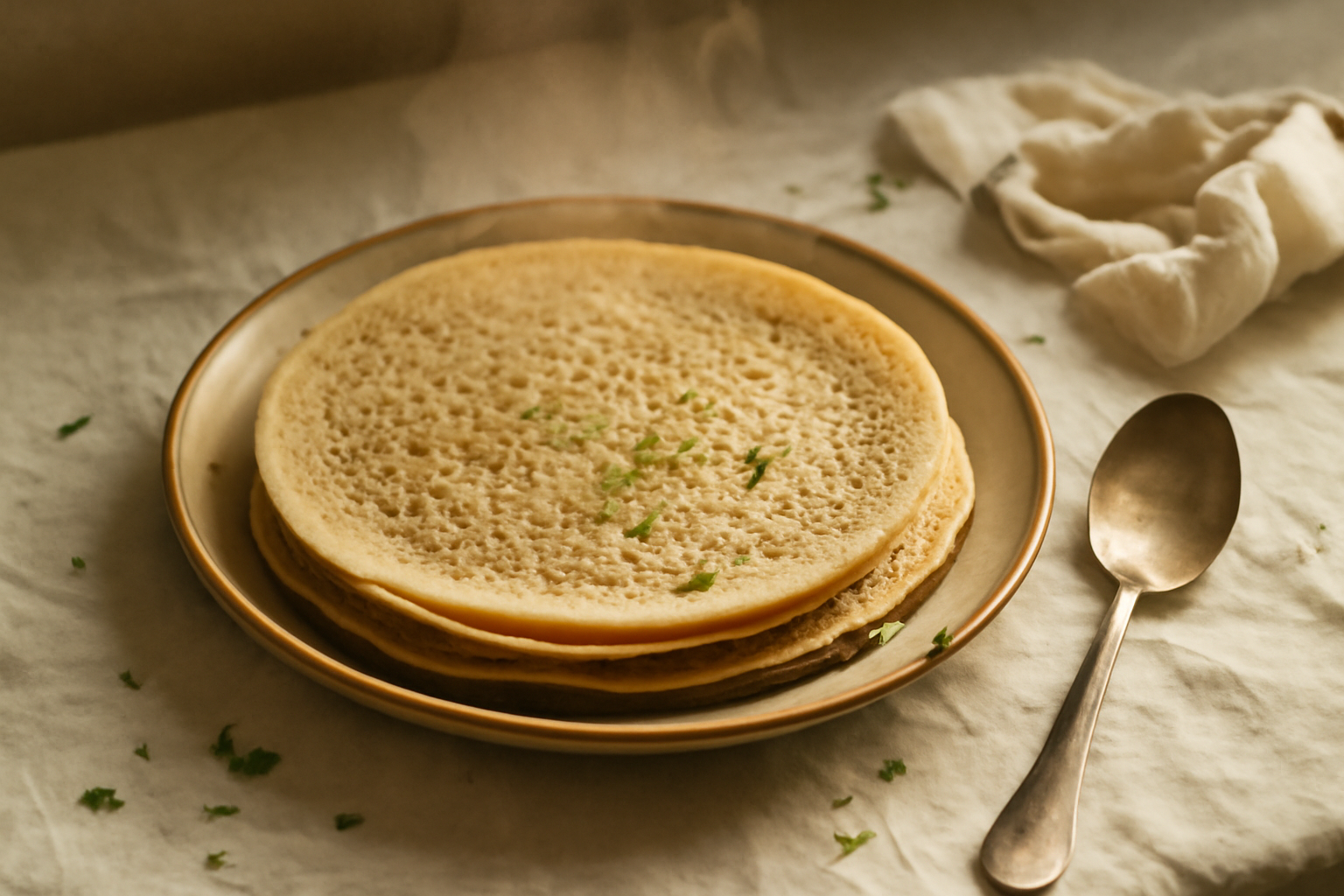 AI image
45 min
start to finish
15 min
hands on
Some skill
difficulty
6
servings
Ingredients
Contains gluten. Cooking for an allergy? Check the label on every packet you use — brands differ, and we can only tell you what the recipe calls for.
Method
In a large bowl whisk together the teff flour, all-purpose flour and sugar until evenly mixed.
Stir the yeast into 1 cup (240 ml) of the warm water to dissolve, then pour into the flours. Add the remaining warm water and whisk until smooth and free of lumps. The batter should be quite thin—more like crepe batter than American pancake batter.
Cover the bowl with a clean kitchen towel or plastic wrap and leave at room temperature to ferment until bubbly and slightly sour-smelling, 8–12 hours (overnight).
Warmer kitchens shorten fermentation; cooler kitchens lengthen it. The batter should show bubbles and a faint tang.
After fermentation, stir in 2 tablespoons oil and 1 teaspoon salt. Check consistency: it should pour easily. If it feels too thick, whisk in 1–2 tablespoons water at a time to loosen.
If you used mostly teff, it may absorb more water—adjust until batter is thin but not watery.
Heat a 10–12-inch nonstick or well-seasoned skillet over medium. Lightly brush or spray with oil. Pour about 1/4 cup batter into the center and quickly tilt and swirl the pan so the batter spreads to a thin circle (it’s okay if it’s slightly irregular).
Cook without flipping until the surface is set and hundreds of tiny holes form and no raw batter remains—about 1–2 minutes. The underside will be lightly golden but you do not flip these like American pancakes.
If holes do not form, the batter is likely too thick or the pan not hot enough—thin the batter slightly or raise heat a touch.
Transfer the cooked canjeero to a plate and repeat with the remaining batter, brushing the pan with a little oil as needed. Stack cooked canjeero and cover with a clean towel to keep them soft.
Serve warm. For breakfast try with a drizzle of date syrup or agave and a smear of olive oil, or serve alongside a savory stew or bean dish.
Worth knowing
- Teff note: Using all teff flour (100%) makes the recipe naturally gluten-free but may require an extra 2–4 tablespoons water and produces a more fragile, slightly earthier crepe. If you can't find teff, use 2 cups all-purpose or a 1 cup all-purpose + 1 cup whole-wheat mix—both will make good canjeero but will contain gluten.
- Faster fermentation: if you want to cut the ferment time to ~4–6 hours, increase the yeast to 1 teaspoon. The flavor will be less tangy than a long ferment.
- If batter becomes too sour after long fermentation, stir in 2–4 tablespoons fresh flour and a little water to refresh before cooking.
- Make-ahead and storage: cooked canjeero keep in the refrigerator for 2 days; reheat gently in a skillet or steam briefly under a towel to soften. Leftover batter can be refrigerated and used within 24 hours, but watch for over-fermentation.
- For an airier texture, blitz the fermented batter in a blender for 15–20 seconds before cooking to incorporate more air.
Make it yours
Cooking without dairy, without an oven, for someone who won't touch chilli, or for six instead of four? Have the recipe rewritten around it — quantities, steps and all.
VeganKid friendlyBudget
More Somali cooking


An original Restaurant Pro recipe — our own composition in the idiom of Somali cooking, not any restaurant's recipe. Written to be vegan as listed.