
Daging Rendang (Slow‑Braised Indonesian Beef Rendang)
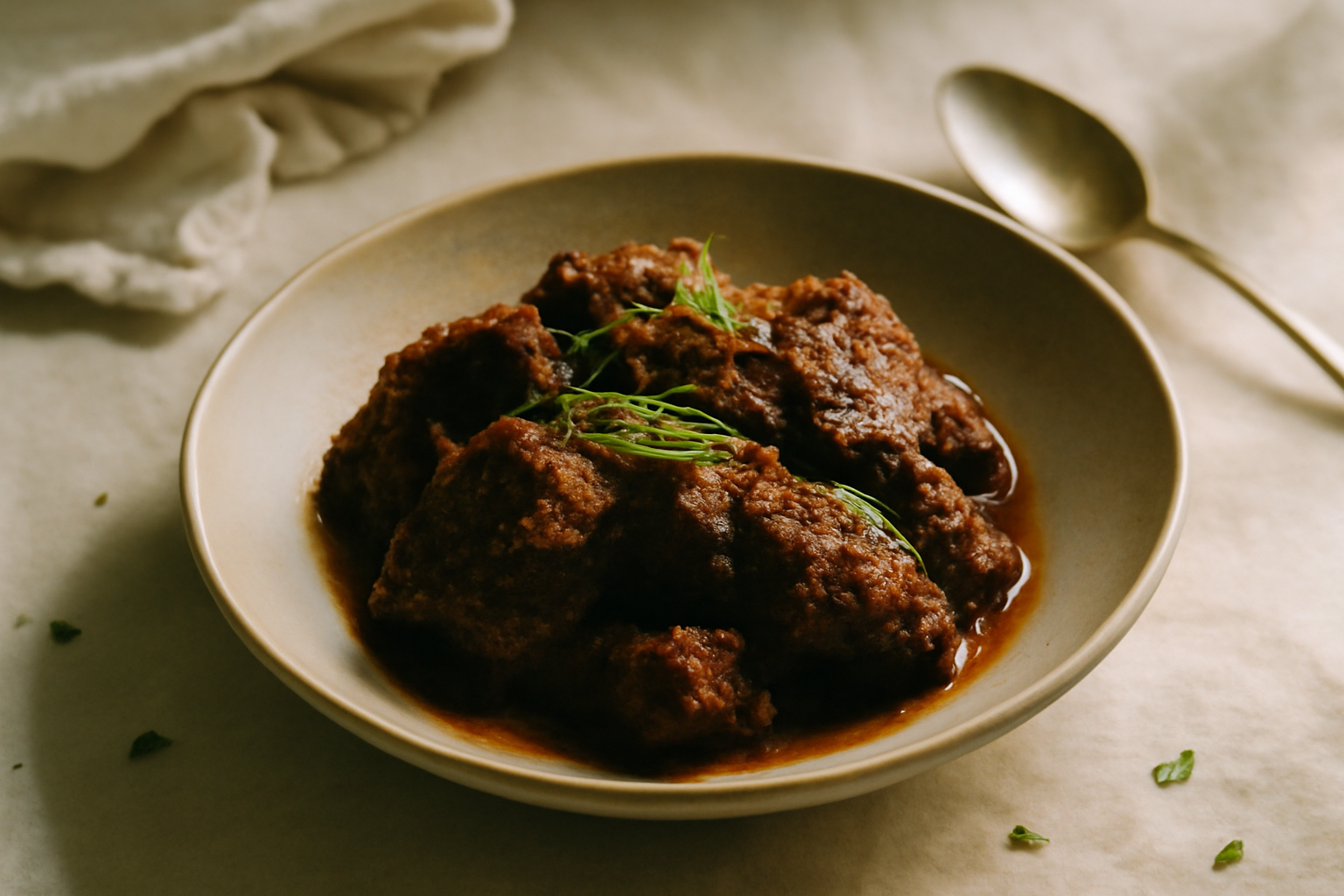
A Minangkabau-style beef rendang: beef slow-braised in a deeply spiced coconut sauce until the sauce clings and the meat is lacquered and richly caramelized. It’s a true afternoon project — long simmering but mostly hands-off — worth the time for dinner or company.
 AI image
4 hr
start to finish
1 hr
hands on
Project
difficulty
6
servings
Ingredients
For the spice paste
Main
For the kerisik (toasted coconut paste)
To finish
Optional
Method
Toast the coriander seeds and black pepper in a dry skillet over medium heat until fragrant, about 2–3 minutes, then set aside to cool.
If using dried chilies, soak them in hot water until soft for 10–15 minutes, then drain; if using fresh chilies, roughly chop.
Make the spice paste: put toasted coriander and pepper, shallots, garlic, ginger, galangal, turmeric, chilies, ground cumin, salt and palm sugar into a blender or food processor and blend to a smooth paste, adding a few tablespoons of water if needed to help blend.
Toast the grated coconut for kerisik in a dry skillet over medium heat, stirring constantly until it turns deep golden brown and smells nutty, 12–18 minutes; transfer to a mortar or small processor and grind to a coarse paste (kerisik).
Pat the beef cubes dry with paper towels and trim any very large pieces so cubes are uniform for even cooking.
Heat 3 tablespoons oil in a large heavy-bottomed pot or Dutch oven over medium-high heat until shimmering; add the spice paste and fry, stirring constantly, until it darkens and the oil separates from the paste, 8–10 minutes.
Add the cinnamon stick, star anise, cloves, bruised lemongrass and torn kaffir lime leaves to the pot and fry with the paste for 2 minutes to bloom the spices.
Add the beef cubes and sear, stirring often, until the outside of the cubes is lightly browned and coated in the paste, about 8–10 minutes.
Pour in the coconut milk and add tamarind paste and 1 tablespoon palm sugar; bring to a gentle simmer over medium heat, stirring to combine.
Reduce heat to low so the pot is at a gentle simmer; cook uncovered, stirring every 15–20 minutes so nothing sticks, until the liquid has reduced and meat is tender, about 120 minutes.
Stir in the kerisik (toasted coconut paste), distribute it evenly, and continue to cook on low, stirring occasionally, until the sauce thickens further, darkens and clings to the meat (oil will separate), 60 minutes.
Taste and adjust seasoning with the remaining 1.5 teaspoons salt and up to 1 tablespoon palm sugar; remove the cinnamon, star anise and cloves if you prefer, and finish with lime juice if using.
Let the rendang rest off the heat for 10–15 minutes to firm slightly, then serve with steamed rice.
Worth knowing
- Use beef with some connective tissue (chuck, brisket, or short rib) — the slow braise breaks it down and gives the silky mouthfeel rendang is known for.
- If short on time, cook on the stovetop until the meat is mostly tender, then transfer to a 150°C (300°F) oven, uncovered, to continue reducing; check and stir every 30 minutes.
- Kerisik gives an authentic nutty depth; if you can’t make it, use 3–4 tbsp unsweetened desiccated coconut, fried until very dark, then pulse in a grinder — texture and flavor will be different but still good.
- Rendang improves the next day as flavors meld; reheat gently in a skillet adding a splash of water or coconut milk if it’s very stiff.
- Keep stirring every 15–20 minutes during long simmering to prevent sticking and to encourage even reduction of the coconut milk.
Make it yours
Cooking without dairy, without an oven, for someone who won't touch chilli, or for six instead of four? Have the recipe rewritten around it — quantities, steps and all.
More Indonesian cooking



An original Restaurant Pro recipe — our own composition in the idiom of Indonesian cooking, not any restaurant's recipe.