
Lablabi — Tunisian Chickpea Stew (whole‑meal bowl with bread, harissa & tuna)
Hearty Tunisian chickpea stew (lablabi) served over torn stale bread and finished with harissa, olive oil, lemon and canned tuna — a cheap, filling one‑bowl meal with bright, bold flavors.
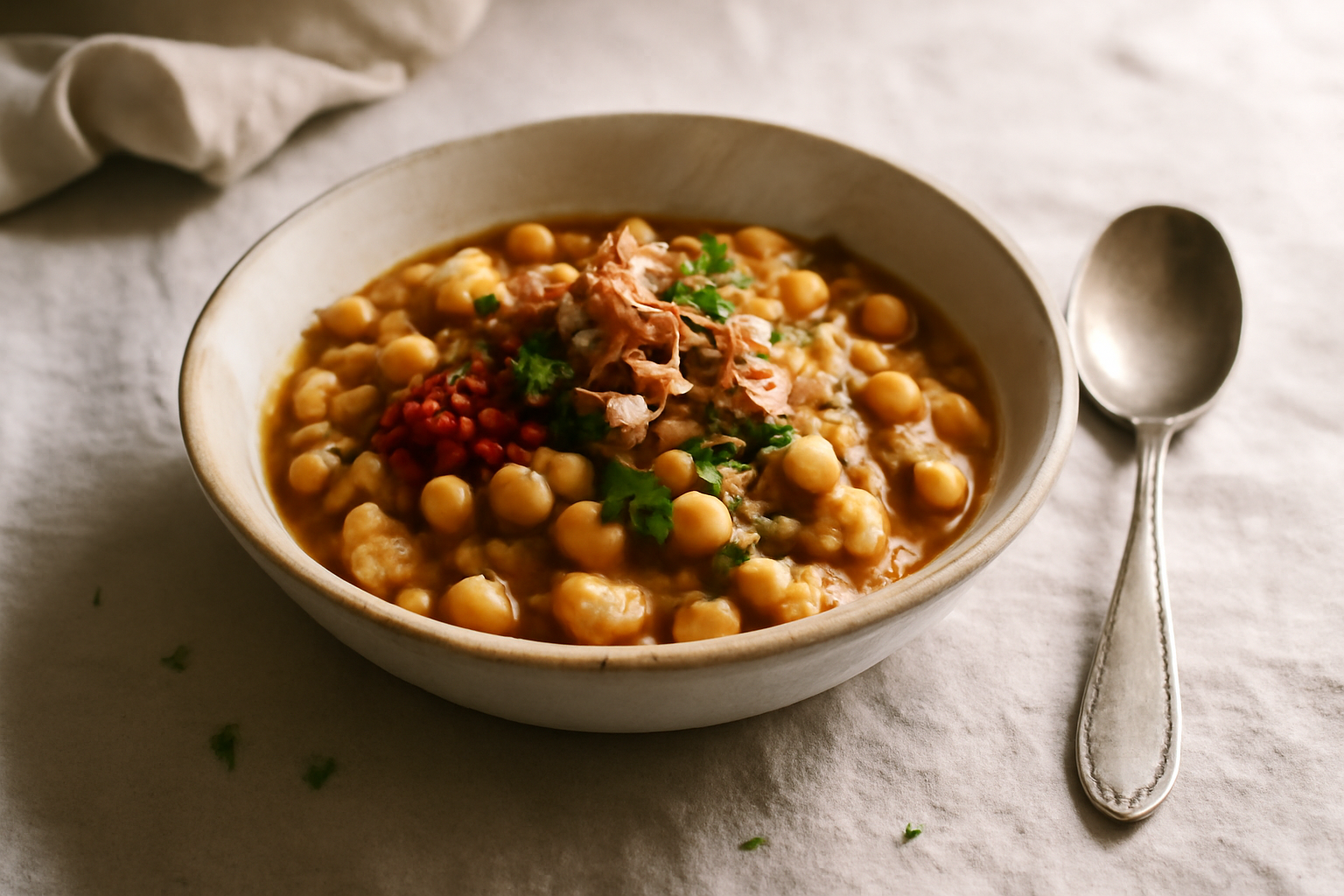 AI image
1 hr 20 min
start to finish
20 min
hands on
Some skill
difficulty
4
servings
Ingredients
For the stew
Toppings & to serve
Contains gluten, fish, egg. Cooking for an allergy? Check the label on every packet you use — brands differ, and we can only tell you what the recipe calls for.
Method
Soak the dried chickpeas in plenty of cold water overnight (at least 8–12 hours) and refrigerate while soaking.
Drain and rinse the soaked chickpeas and set aside.
Heat 1 tablespoon olive oil in a large heavy pot over medium heat and add the sliced onion; cook, stirring occasionally, until soft and beginning to color.
You want the onion soft and lightly golden to build flavor.
Add the minced garlic and tomato paste to the pot and cook, stirring, until fragrant, about 1 minute.
Add the drained chickpeas, 8 cups water or stock, 2 teaspoons ground cumin and the bay leaf; bring to a boil.
Lower the heat to a gentle simmer, cover partially, and cook until the chickpeas are tender and begin to break down, about 45 minutes (longer if your chickpeas are older).
While the chickpeas simmer, preheat the oven to 400°F (200°C).
Spread the torn bread on a baking sheet and toast in the oven until crisp and edges are golden, about 8–10 minutes; remove and keep warm.
Stale bread is traditional; if fresh, dry it out more in the oven so it soaks up the broth without falling apart immediately.
In a small saucepan, bring water to a rolling boil and gently lower the eggs in; cook for 7–8 minutes for jammy yolks or 10–12 minutes for fully hard‑cooked eggs, then transfer to cold water and peel.
Jammy eggs are common — they add richness when broken into the stew.
When the chickpeas are tender, remove the bay leaf and use a potato masher or the back of a ladle to crush roughly one-third of the chickpeas in the pot to thicken the broth.
This creates the creamy body that makes lablabi comforting.
Season the stew with salt and pepper to taste and stir in 2 tablespoons fresh lemon juice.
Assemble bowls: divide the toasted bread among four deep bowls, ladle hot chickpeas and broth over the bread so it soaks, then halve the eggs and add to each bowl.
Top each bowl with a portion of drained canned tuna, a spoonful of harissa (or more to taste), a drizzle of olive oil, a sprinkle of ground cumin and chopped parsley; add capers and lemon wedges if using.
Stir briefly at the table so the bread breaks up and absorbs the broth, and adjust lemon or harissa to taste before eating.
Worth knowing
- Shortcut with canned chickpeas: use 4 (15 oz) cans drained; skip soaking and reduce simmer to 10–15 minutes so flavors meld.
- For a more traditional, punchy lablabi, serve extra harissa and olive oil so each diner can season their bowl.
- If you prefer no fish, omit the tuna and add extra eggs or preserved lemons for brightness.
- Make a larger batch and refrigerate; lablabi flavors deepen after a day and it reheats well (add extra water when reheating).
Make it yours
Cooking without dairy, without an oven, for someone who won't touch chilli, or for six instead of four? Have the recipe rewritten around it — quantities, steps and all.
PescatarianDairy-freeHalalBudgetMeal prep
More Tunisian cooking
An original Restaurant Pro recipe — our own composition in the idiom of Tunisian cooking, not any restaurant's recipe. Written to be pescatarian and dairy-free and halal as listed.