
Laing (Vegan Taro Leaves in Coconut Milk)
A Bicol-style braise of taro (gabi) leaves in rich coconut milk with garlic, ginger and chilies. Creamy, spicy and perfect with steamed rice — made entirely plant-based.
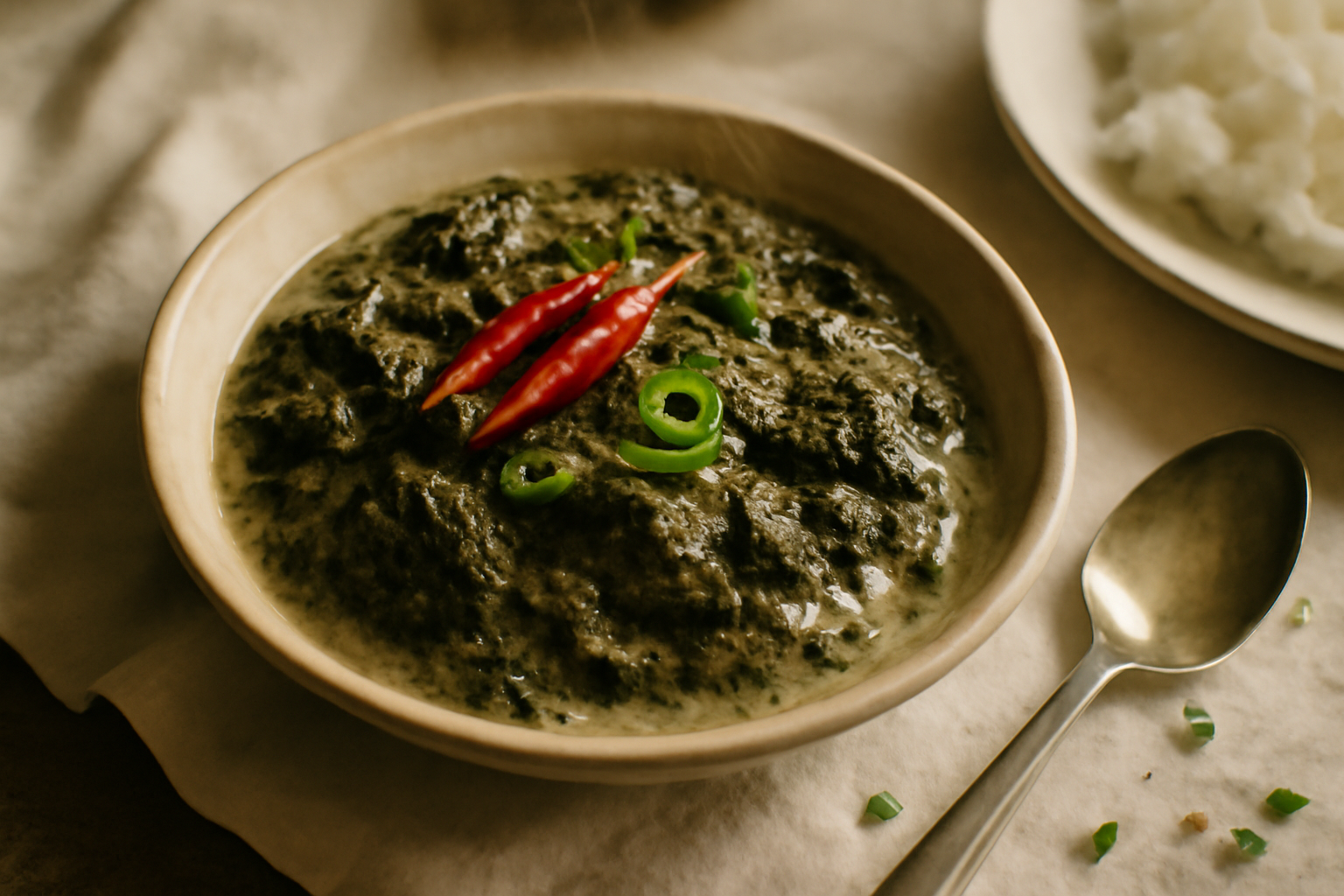 AI image
1 hr 10 min
start to finish
20 min
hands on
Some skill
difficulty
4
servings
Ingredients
Contains tree-nut, soy. Cooking for an allergy? Check the label on every packet you use — brands differ, and we can only tell you what the recipe calls for.
Method
Prepare the taro leaves: stack a few leaves at a time, cut away and discard the thick center ribs (they're fibrous), then wash leaves thoroughly and slice crosswise into 1–1½ inch strips or leave whole if they comfortably fit in your pot.
Wear gloves if you have sensitive skin; raw taro leaves can irritate.
If using tofu, press it between paper towels with a weight for 10 minutes to remove excess water, then cut into 1/2-inch cubes.
Heat 1 tbsp vegetable oil in a wide, heavy-bottomed pot over medium heat.
A wide pot helps the leaves wilt and cook evenly.
Add minced garlic, sliced onion, julienned ginger and sliced lemongrass (if using) and sauté until the onion is translucent and garlic is fragrant, about 4–5 minutes.
If using tofu, heat a small skillet over medium and pan-fry the tofu cubes in a little oil, turning occasionally, until golden on at least two sides.
Pan-frying helps the tofu hold its shape in the braise.
Pour the coconut milk and 120 ml water into the pot with the aromatics and bring to a gentle simmer over medium heat.
Stir in soy sauce, sugar and salt, then add sliced chilies.
Taste and adjust seasoning — coconut milk can mask saltiness, so balance carefully.
Add the taro leaves in batches, pressing each batch down so the leaves are submerged in the coconut liquid; stir gently to coat.
Don't over-stir; the leaves will break down if handled roughly.
Reduce heat to low, cover the pot, and simmer gently until the leaves are fully tender and the sauce is slightly reduced and thickened, about 30 minutes. Stir once or twice while cooking to prevent sticking.
If the mixture seems too thick partway through, add 1–2 tbsp water; if too thin at the end, remove the lid for the last 5–10 minutes to reduce.
Stir the pan-fried tofu into the pot (if using) and simmer uncovered for 5 minutes to let flavors meld.
Turn off the heat and let the laing rest for 10 minutes before serving to allow the leaves to finish tenderizing and flavors to settle.
Serve hot with steamed rice and, if desired, sprinkle toasted coconut flakes on top.
Laing is often even better the next day after flavors develop — reheat gently over low heat.
Worth knowing
- Handle raw taro leaves carefully; they can itch. Use gloves if you have sensitive skin and avoid rubbing your eyes.
- Use full-fat canned coconut milk for the classic creamy texture; light versions will yield a thinner sauce.
- For a gluten-free dish, use certified gluten-free tamari instead of regular soy sauce.
- Laing keeps well refrigerated for 3–4 days and reheats over low heat; it also freezes (thaw in refrigerator overnight before reheating).
- If you can't find fresh taro leaves, some Asian markets sell frozen cleaned taro leaves — adjust cooking time as frozen leaves may be more tender.
Make it yours
Cooking without dairy, without an oven, for someone who won't touch chilli, or for six instead of four? Have the recipe rewritten around it — quantities, steps and all.
VeganMeal prepOne pan
Watch someone make it
A different recipe for the same dish, by a cook who has spent years on it.


More Filipino cooking
An original Restaurant Pro recipe — our own composition in the idiom of Filipino cooking, not any restaurant's recipe. Written to be vegan as listed.