
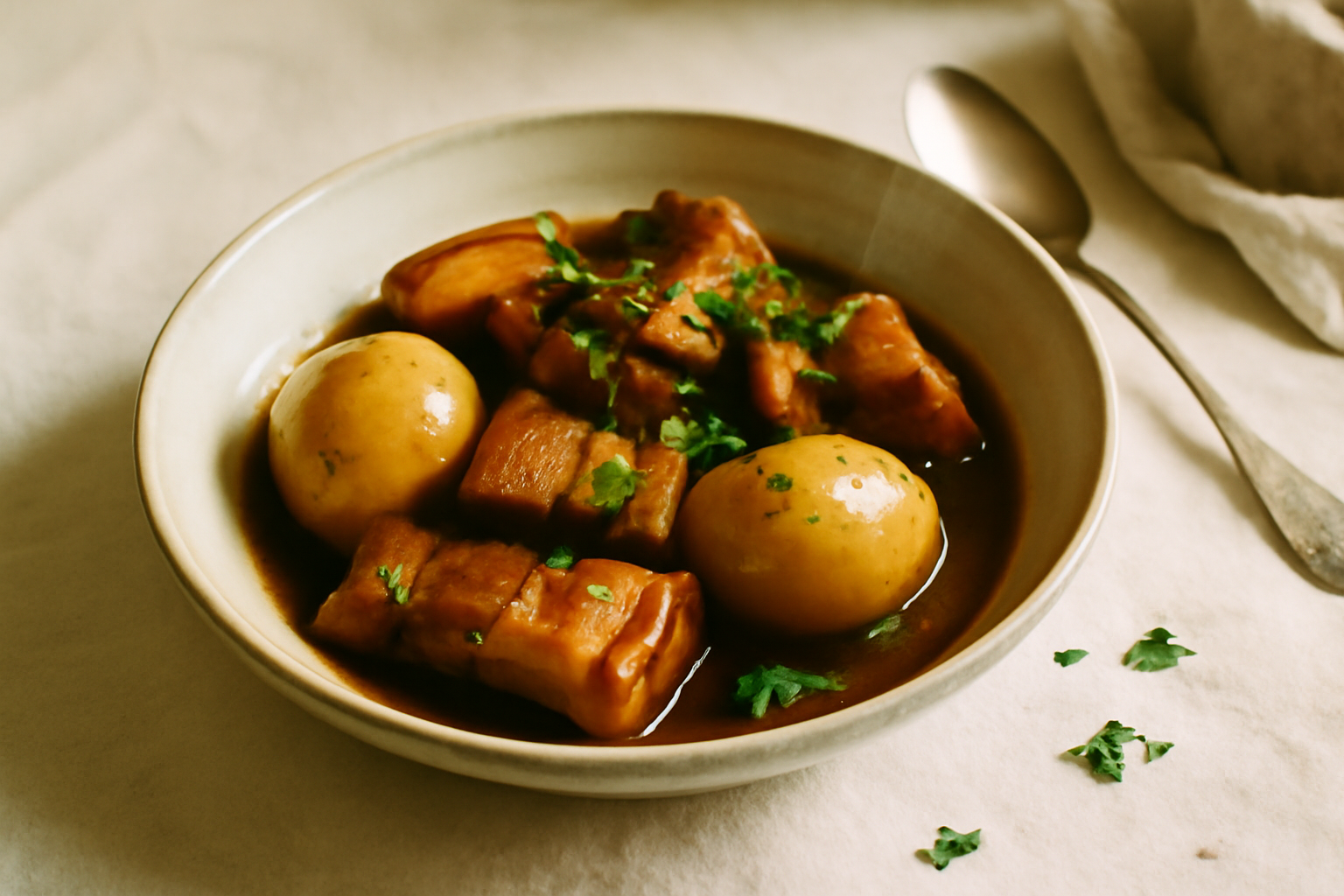
Thịt Kho Trứng — Vietnamese Caramel Braised Pork Belly with Eggs (make-ahead)
Slow-braised pork belly and hard-boiled eggs in a glossy caramel-coconut sauce. It keeps very well in the fridge and develops deeper flavor over 2–4 days—perfect for batch cooking.
 AI image
1 hr 50 min
start to finish
20 min
hands on
Some skill
difficulty
6
servings
Ingredients
Contains egg, fish. Cooking for an allergy? Check the label on every packet you use — brands differ, and we can only tell you what the recipe calls for.
Roughly, per serving
520 kcal24g protein14g carbs42g fat
An estimate, not a lab analysis.
Method
Place eggs in a small saucepan and cover with cold water by 1 inch (2.5 cm).
Bring the water to a boil, reduce to a gentle boil, and cook the eggs for 8 minutes.
Prepare an ice bath (bowl of cold water and ice). When eggs are done, drain and plunge them into the ice bath to stop cooking.
When cool, peel the eggs and set aside.
Heat a large Dutch oven or heavy-bottomed pot over medium-high heat and add 2 tbsp neutral oil.
Working in batches so you don't crowd the pan, brown the pork belly cubes on all sides until nicely colored, about 6–8 minutes per batch; transfer browned pieces to a plate.
Wipe out excess fat from the pot, leaving about 1 tablespoon (or keep more if you like a fattier sauce).
Make the caramel: add 3 tbsp sugar and the 2 tbsp water (not the 1 cup listed for the braise) to the pot and cook over medium heat, swirling occasionally, until the sugar melts and becomes a deep amber color.
Watch closely — caramel goes from amber to burnt quickly. If it hardens, add a splash of the coconut water and warm to dissolve.
Add the sliced shallots and chopped garlic to the caramel and sauté 1–2 minutes to soften and pick up flavor.
Return the browned pork to the pot and toss to coat in the caramel-shallot mixture.
Pour in 2 cups coconut water and 1 cup water, then add 3 tbsp fish sauce and 1 tsp freshly ground black pepper. Stir and bring to a gentle simmer.
Nestle the peeled hard-boiled eggs into the braise so they are mostly submerged.
Simmer gently, uncovered, over low heat until the pork is tender and the sauce has reduced to a glossy, slightly thickened glaze, about 60 minutes. Skim excess fat from the surface once or twice while it cooks.
If sauce reduces too quickly, add a few tablespoons of water. You want a saucy glaze, not completely dry pork.
Taste and adjust seasoning — add a little more fish sauce if you want it saltier or a small pinch of sugar for balance.
Remove from heat, sprinkle sliced scallions over the top, and let the pot cool to room temperature before refrigeration.
Transfer the braise to an airtight container and refrigerate. Leftovers will keep 4–5 days; flavors deepen after a day.
To reheat: gently warm portions in a saucepan over low heat with a splash of water (5–8 minutes) or microwave until hot. Serve with steamed rice and an optional squeeze of lime.
Worth knowing
- Use coconut water for a gentle sweetness and glossy finish; if you can't find it, use low-sodium chicken stock instead (note: that adds another ingredient).
- If you prefer less fat, trim some of the pork belly rind or boil the cubed pork in water for 2 minutes and drain before browning to render a bit of surface fat.
- This dish improves after a day as the sauce soaks into the pork and eggs—plan to make it a day ahead if possible.
- To serve: reheat and spoon the pork and eggs over jasmine rice with lots of fresh cucumber, herbs, and pickled vegetables on the side to cut the richness.
Make it yours
Cooking without dairy, without an oven, for someone who won't touch chilli, or for six instead of four? Have the recipe rewritten around it — quantities, steps and all.
Meal prepBudget
More Vietnamese cooking
An original Restaurant Pro recipe — our own composition in the idiom of Vietnamese cooking, not any restaurant's recipe.