
Weeknight Shrimp Pad Thai
A quick, balanced Pad Thai you can make on a weeknight: chewy rice noodles, bright tamarind-fish sauce dressing, plump shrimp, crunchy peanuts and bean sprouts — ready in about 25 minutes.
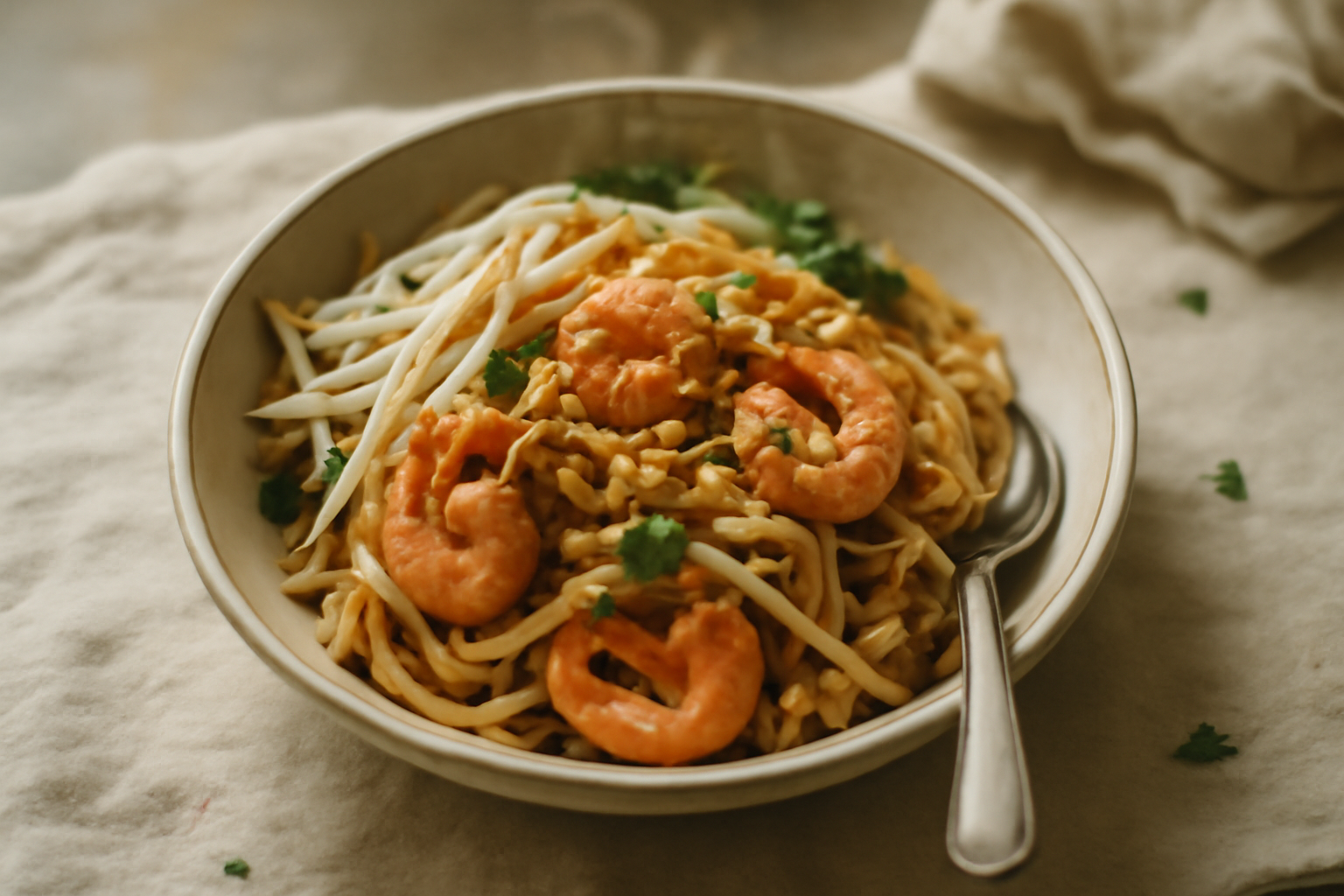 AI image
25 min
start to finish
10 min
hands on
Some skill
difficulty
4
servings
Ingredients
For the sauce
For the sauce (optional)
Contains shellfish, egg, fish, tree-nut. Cooking for an allergy? Check the label on every packet you use — brands differ, and we can only tell you what the recipe calls for.
Roughly, per serving
580 kcal32g protein68g carbs20g fat
An estimate, not a lab analysis.
Method
Put the rice noodles in a large heatproof bowl. Pour enough just-boiled water over them to cover and stir gently to separate. Let sit until pliable but still slightly firm at the center (check package; usually 8–10 minutes).
If package says to boil briefly instead of soaking, follow the package. Don't let noodles go fully soft — they'll finish in the wok.
While the noodles soak, whisk the fish sauce, tamarind paste, palm sugar, warm water and chili flakes in a small bowl until the sugar dissolves. Taste and adjust: it should be balanced — salty, sour and slightly sweet.
If tamarind paste is very thick, warm it a few seconds in the microwave to loosen before whisking.
Drain the noodles, reserving 1/4 cup of the soaking water and set both aside. Pat the shrimp dry and season lightly with 1/4 tsp salt.
Heat a large wok or heavy 12-inch skillet over high heat until very hot. Add 2 tablespoons oil and swirl.
Add the shrimp in a single layer and stir-fry until pink and just cooked through, about 2–3 minutes total (they should curl and turn opaque). Transfer shrimp to a plate.
Add the remaining 1 tablespoon oil to the wok. Reduce heat to medium-high, add the minced garlic and cook, stirring, until fragrant, about 20–30 seconds.
Push the garlic to one side of the wok, pour the beaten eggs into the empty space and let them set for about 10 seconds, then scramble quickly until just set but still soft.
Add the drained noodles and the sauce to the wok. Toss and stir vigorously to coat the noodles; if the mixture looks dry or the sauce sticks, add up to 2 tablespoons of the reserved soaking water at a time until the noodles glide.
Use tongs or two spatulas to fold and toss so noodles don't break.
Return the cooked shrimp to the wok along with the bean sprouts and most of the scallions (reserve some scallions and sprouts for garnish). Toss everything together for 1–2 minutes until heated through and the noodles are tender.
Turn off the heat. Squeeze the juice of half a lime over the pad thai, sprinkle with chopped peanuts and toss briefly. Taste and adjust with more lime or a pinch of sugar if desired.
Serve immediately with lime wedges, additional peanuts, reserved scallions and bean sprouts, cilantro and extra sliced chiles at the table.
Worth knowing
- Tamarind substitute: mix 2 tablespoons lime juice with 1 tablespoon light brown sugar for a quick substitute if you don't have tamarind paste; the flavor will be brighter but still tasty.
- If you prefer gluten-free, use certified gluten-free fish sauce (most are) and check labels on palm sugar; omit any soy-containing condiments.
- Don't overcrowd the wok when cooking shrimp — work in two batches if necessary so they sear quickly instead of steaming.
- Make the sauce small-batch and taste it before adding to the noodles — tamarind concentrates vary in strength.
Make it yours
Cooking without dairy, without an oven, for someone who won't touch chilli, or for six instead of four? Have the recipe rewritten around it — quantities, steps and all.
PescatarianQuick
More Thai cooking
An original Restaurant Pro recipe — our own composition in the idiom of Thai cooking, not any restaurant's recipe. Written to be pescatarian as listed.