
Yu Xiang (Fish‑Fragrant) Eggplant with Pan‑Fried Tofu
A deeply savory, sweet‑tangy Sichuan dish built around silky eggplant and crisped tofu so rich in umami no one will miss meat. Uses doubanjiang, black vinegar and aromatics for the classic 'fish‑fragrant' flavor without any fish.
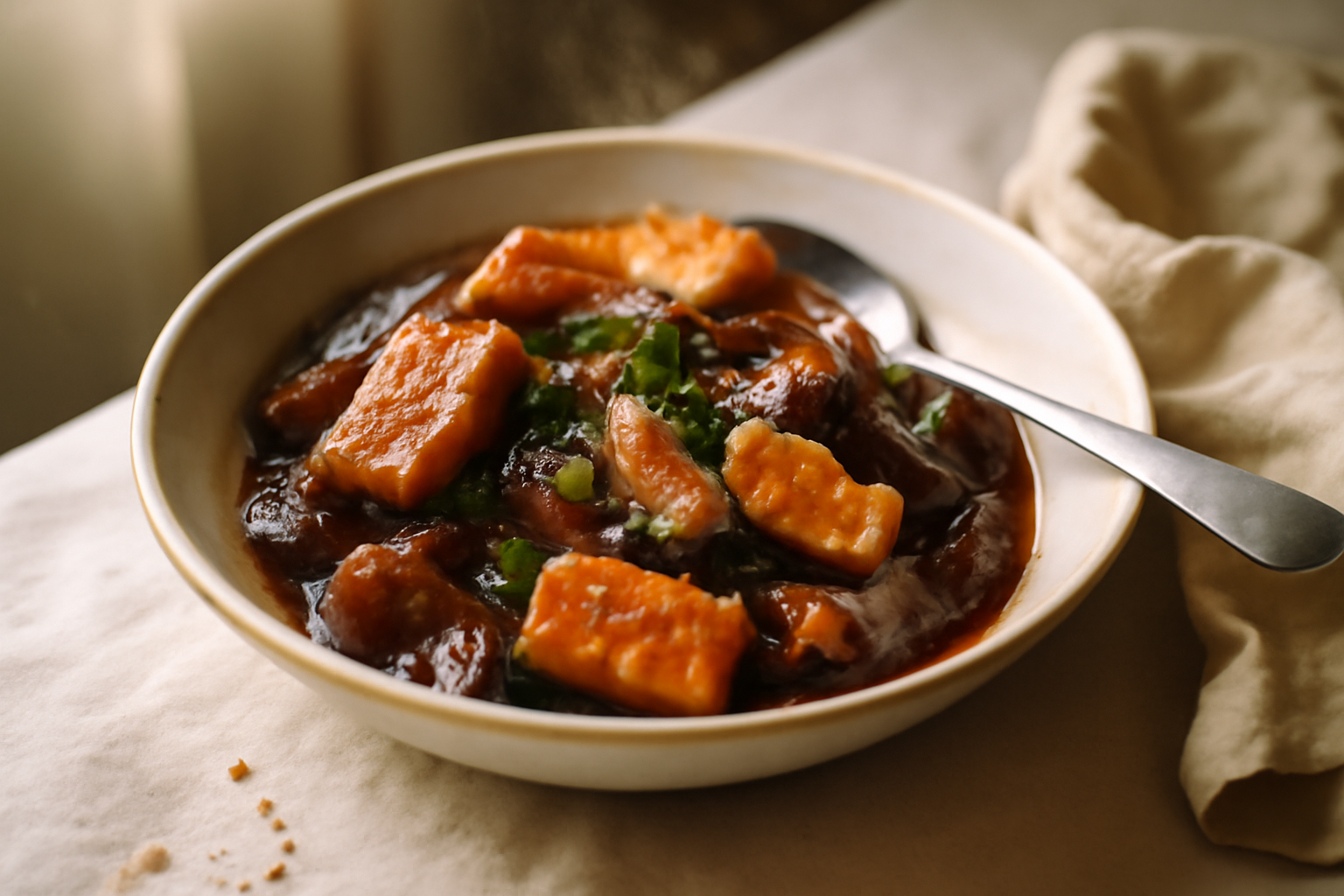 AI image
40 min
start to finish
20 min
hands on
Some skill
difficulty
4
servings
Ingredients
For the sauce
Slurry
Contains soy, gluten, sesame. Cooking for an allergy? Check the label on every packet you use — brands differ, and we can only tell you what the recipe calls for.
Roughly, per serving
320 kcal8g protein10g carbs27g fat
An estimate, not a lab analysis.
Method
Press the tofu: wrap the tofu in paper towels or a clean kitchen towel, place on a plate and set a small weight on top (a heavy pan). Press for 15 minutes to remove excess water.
Pressing lets tofu crisp instead of steaming; skip if using extra‑firm.
Salt the cut eggplant lightly and let sit in a colander 10 minutes to draw some moisture; this makes them absorb less oil and keeps texture tender.
While tofu and eggplant rest, whisk the sauce: combine light soy sauce, black vinegar, sugar and vegetable stock in a bowl; set aside.
Pat the eggplant dry with paper towels and toss with 1 tablespoon cornstarch so pieces are lightly coated.
Heat a wide skillet or wok over medium‑high. Add 3 tablespoons vegetable oil. When hot, add tofu cubes in a single layer and pan‑fry without moving until the bottoms are golden, about 3–4 minutes.
Turn tofu pieces and brown on remaining sides, 3–4 more minutes. Remove tofu to a plate lined with paper towels.
Add the remaining 3 tablespoons oil to the same pan (increase heat to medium‑high if needed). Fry the eggplant in batches so pieces have room; cook until nicely browned and soft throughout, 6–8 minutes per batch. Transfer to a plate.
Eggplant soaks oil—browning in batches helps them cook evenly without steaming.
Discard excess oil, leaving about 1 tablespoon in the pan. Reduce heat to medium. Add the white parts of the scallions, garlic and ginger; stir until fragrant, about 30 seconds.
Watch closely—aromatics burn quickly at high heat.
Stir in doubanjiang and chili garlic sauce; fry 30–45 seconds until the paste releases its aroma.
Add sliced shiitake mushrooms and cook, stirring, 2 minutes until they begin to soften.
Return the eggplant and tofu to the pan, pour in the prepared sauce, and gently stir to combine. Bring to a simmer and cook, uncovered, 4–5 minutes so the flavors meld and eggplant becomes very tender.
Stir the cornstarch slurry (1 tbsp cornstarch + 3 tbsp water) briefly, pour into the pan, and stir until the sauce thickens and glossy, about 1 minute. Taste and adjust salt or sugar if needed.
Finish with sesame oil, scatter the green parts of the scallions and toasted sesame seeds, then transfer to a serving dish.
Worth knowing
- Eggplant choice: Japanese or Chinese (long, thin) eggplants have thinner skin and a sweeter, silkier flesh; if using globe eggplant, peel and cook a bit longer.
- Doubanjiang substitute: if you don't have doubanjiang, use 1 tbsp miso + 1 tbsp chili paste + 1/2 tsp soy sauce; the result is similar but slightly different.
- To make gluten‑free: use tamari or a gluten‑free soy sauce and verify your chili paste has no wheat.
- Air‑fry option: to reduce oil, air‑fry the tofu and eggplant (400°F / 200°C — tofu 10–12 min, eggplant 12–15 min) until browned, then finish in the pan with the sauce.
- Make‑ahead: the flavor improves slightly after a few hours; refrigerate and gently reheat with a splash of water or stock.
Make it yours
Cooking without dairy, without an oven, for someone who won't touch chilli, or for six instead of four? Have the recipe rewritten around it — quantities, steps and all.
VegetarianMeal prepBudget
More Chinese cooking
An original Restaurant Pro recipe — our own composition in the idiom of Chinese cooking, not any restaurant's recipe. Written to be vegetarian as listed.