
Cocido Madrileño (Classic Spanish Chickpea Stew — two-course weekend project)
A hearty Madrid-style cocido that rewards an afternoon: a rich meat-and-chickpea stew served as two courses — first a clear noodle soup from the broth, then the chickpeas, vegetables and sliced meats. Make it for a relaxed weekend lunch.
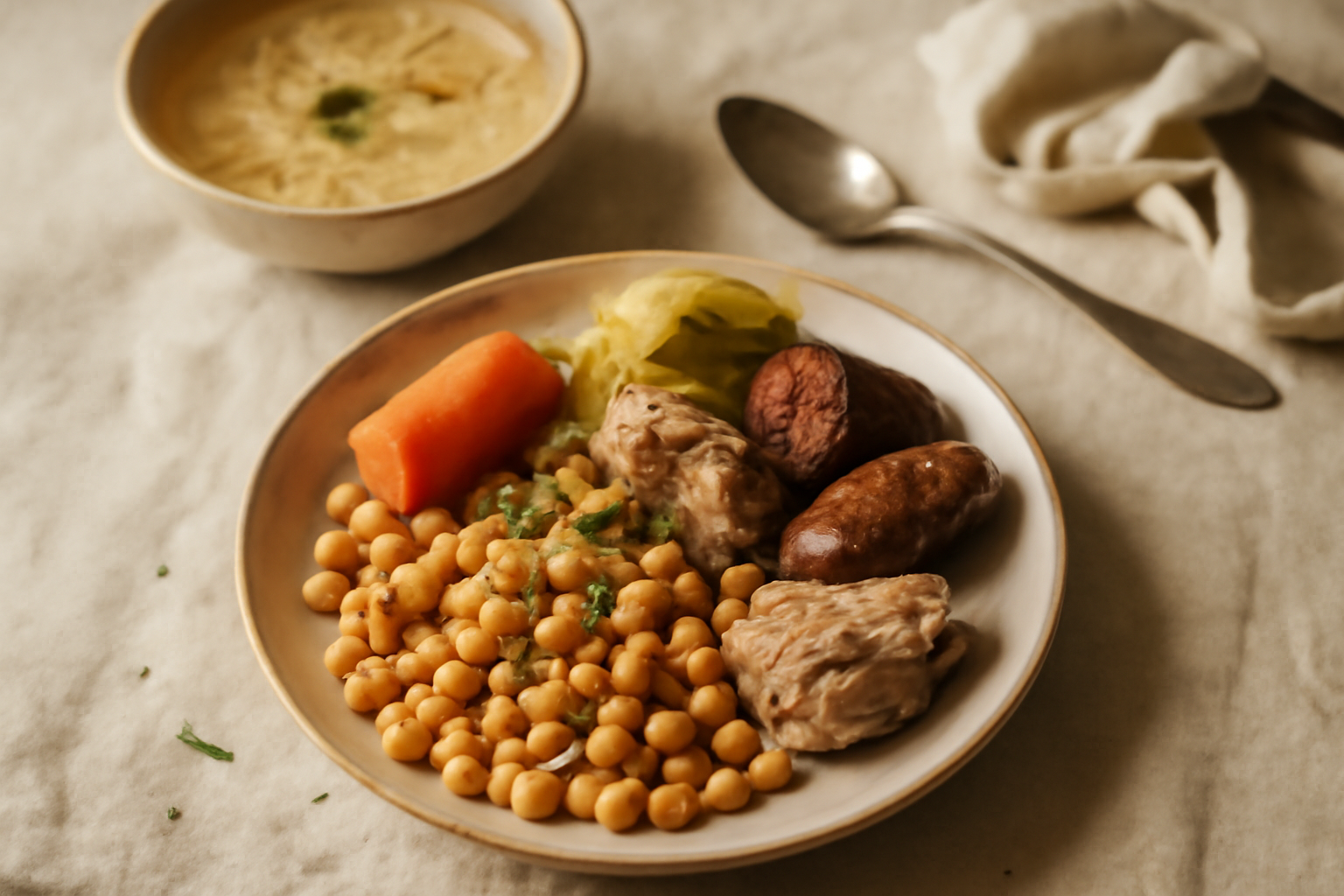 AI image
3 hr 40 min
start to finish
40 min
hands on
Project
difficulty
6
servings
Ingredients
Main cocido
For the soup
To serve
Roughly, per serving
720 kcal48g protein58g carbs36g fat
An estimate, not a lab analysis.
Method
Cover the dried chickpeas with at least 3 inches (7 cm) of cold water in a large bowl and soak in the refrigerator overnight (8–12 hours).
If you forgot to soak, do a quick-soak: bring chickpeas and water to a boil for 2 minutes, turn off heat and let sit 1 hour, then drain.
Put the soaked and drained chickpeas into a large heavy-bottomed stockpot with the beef shank, pork shoulder and ham bone; add the whole onion, garlic cloves, bay leaves, peppercorns and cold water to cover.
Starting with cold water helps extract a clear, flavorful broth.
Bring the pot to a gentle simmer over medium-high heat.
Watch the pot — bring up slowly and lower the heat to prevent a rolling boil, which makes cloudy broth.
Reduce heat to low, cover partially, and simmer gently for 1½–2 hours, skimming any foam or impurities that rise to the surface.
A long, gentle simmer extracts gelatin and flavor from the bones without breaking the meat down too fast.
Use tongs or a slotted spoon to lift the meats (beef, pork shoulder and ham bone) out of the pot and place them on a tray to cool enough to handle.
Remove meat carefully to retain the broth clarity.
Use a slotted spoon to transfer the cooked chickpeas from the pot into a bowl and set aside.
Reserve the chickpeas for the main course (they'll be reheated briefly with the vegetables later).
Add the potatoes, carrot chunks and cabbage wedges to the pot and simmer until the vegetables are tender, about 25–30 minutes.
While the vegetables cook, place the chorizo (and morcilla, if using) in a small saucepan or skillet, cover with a cup of the cocido broth or water and simmer gently for 12–15 minutes to heat through without bursting the skins.
Simmering sausages separately prevents them breaking up and lets you control doneness.
When the vegetables are tender, transfer the potatoes, carrots and cabbage to a warm platter and keep warm.
Arrange vegetables attractively for the main course.
Strain the remaining broth through a fine-mesh sieve into a clean pot; discard solids and return the clear broth to the stove.
A fine sieve or cheesecloth gives a clear, fragrant soup base.
Bring the strained broth to a simmer, add the olive oil and the noodles, and cook until the noodles are just tender (check package), about 4–6 minutes.
Fideos cook quickly — taste for doneness so the soup isn't gummy.
While the soup cooks, shred or slice the cooled meats (remove bones), and slice the chorizo and morcilla.
Slice meats against the grain for tender pieces.
Serve the meal in two courses: ladle the noodle soup first; follow with a large platter of chickpeas, vegetables and sliced meats and sausages. Offer pimentón and chopped parsley at the table.
Cocido is traditionally eaten as a convivial, family-style meal — pass platters so everyone helps themselves.
Worth knowing
- Make the cocido a day ahead: refrigerate the meats and vegetables separately after cooking; the broth will clarify further overnight and reheats beautifully.
- If using canned chickpeas, add them near the end with the vegetables so they don't disintegrate; reduce total simmer time accordingly.
- Use bone-in cuts for depth of flavor; the gelatin from bones gives the broth body.
- Keep the simmer gentle — a vigorous boil will emulsify fat and cloud the broth.
- Leftovers reheat well: serve the chickpeas and meats together with a splash of the reserved broth to revive them.
Make it yours
Cooking without dairy, without an oven, for someone who won't touch chilli, or for six instead of four? Have the recipe rewritten around it — quantities, steps and all.
High proteinMeal prep
More Spanish cooking
An original Restaurant Pro recipe — our own composition in the idiom of Spanish cooking, not any restaurant's recipe.