
Dal Makhani (Slow‑Simmered Punjabi Black Lentils)
A classic North Indian, slow‑simmered black lentil curry that improves after a day — sturdy in the fridge and ideal for weekday reheats and meal‑prep.
2 hr 30 min
start to finish
30 min
hands on
Some skill
difficulty
6
servings
Ingredients
Contains dairy. Cooking for an allergy? Check the label on every packet you use — brands differ, and we can only tell you what the recipe calls for.
Roughly, per serving
300 kcal11g protein31g carbs16g fat
An estimate, not a lab analysis.
Method
Soak the whole black urad dal and kidney beans in cold water so they are covered by at least 2 inches of water.
Soak 8–12 hours or overnight; this shortens cooking time and improves texture.
Drain and rinse the soaked legumes.
Use fresh water for cooking to reduce foam and impurities.
Cook the soaked dal and rajma with 3 cups (720 ml) fresh water and 1/2 tsp salt until very soft and breaking apart (either pressure cooker or stovetop): pressure cooker 20–25 minutes on medium after the first whistle; or simmer in a heavy pot 90–120 minutes, adding water as needed so the mixture stays saucy rather than dry.
A pressure cooker is faster; if simmering on the stove, keep the pot partially covered and check every 20–30 minutes.
Heat the oil and 1 tablespoon butter in a large sauté pan over medium heat, add cumin seeds and let them sizzle briefly.
Don’t burn the cumin; it should become fragrant in 15–30 seconds.
Add the chopped onion and sauté until deeply golden brown (about 10–12 minutes).
Patience here gives the masala a rich, rounded flavor—stir frequently and lower the heat if the onions brown too fast.
Add the grated ginger, chopped garlic and optional green chili; cook 1–2 minutes until raw smell disappears.
Stir in turmeric, red chili powder and ground coriander; cook 30 seconds to bloom the spices.
Pour in the tomato puree, add 1/2 tsp salt and the jaggery/brown sugar; simmer until the oil separates from the masala and it thickens slightly (about 8–10 minutes).
If the puree splatters, lower heat and cover the pan with a splatter guard.
Add the cooked dal and beans (including any cooking liquid you want to keep) to the tomato masala and bring to a gentle boil.
If the mixture looks too thick, add 1/2 cup water at a time to reach a loose, creamy consistency—Dal Makhani is traditionally on the saucier side before final reduction.
Simmer the combined dal and masala on very low heat, partially covered, stirring occasionally and mashing a few beans against the side of the pan to create a creamy texture.
Long, gentle simmering develops the characteristic smoky, buttery flavor; scrape any fond from the bottom into the dal while stirring.
Stir in the remaining 2 tablespoons butter, the cream, kasuri methi (crushed) and garam masala; simmer 4–5 minutes to meld flavors.
Add cream slowly and taste — you can use less for a lighter finish.
Turn off the heat, stir in lemon juice if using, taste and adjust salt or sugar, and let the dal sit 10 minutes before serving.
Dal Makhani often tastes better after resting for 20–30 minutes; it continues to thicken as it cools.
Cool the dal to room temperature, then transfer to an airtight container and refrigerate.
Crack the lid for the first 15–20 minutes to speed cooling. Dal Makhani keeps well in the fridge 4–5 days; reheat gently on low adding a splash of water and a pat of butter or a drizzle of cream if it seems dry.
Worth knowing
- For a slightly smoky touch, briefly char a small piece of coal over an open flame, place it in a small metal bowl, set the bowl in the dal, pour a teaspoon of hot ghee over the coal, and cover the pot immediately to trap the smoke for 1–2 minutes (optional).
- If you prefer less fat, reduce butter to 2 tbsp and use 2 tbsp low‑fat cream or 2 tbsp plain yogurt stirred in off heat.
- Use an immersion blender for 5–10 seconds if you want a silkier finish—don’t overblend; keep some whole lentils for texture.
Make it yours
Cooking without dairy, without an oven, for someone who won't touch chilli, or for six instead of four? Have the recipe rewritten around it — quantities, steps and all.
VegetarianMeal prepHigh protein
Watch someone make it
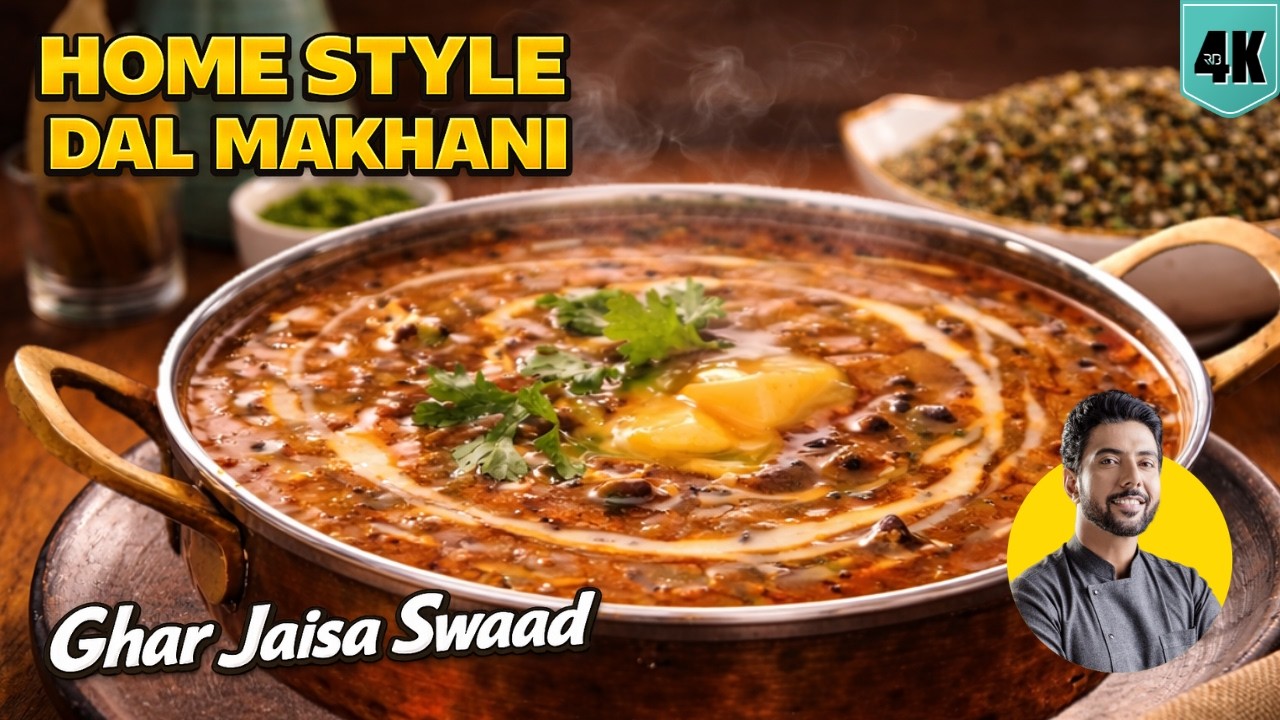
A different recipe for the same dish, by a cook who has spent years on it.

More North Indian cooking
An original Restaurant Pro recipe — our own composition in the idiom of North Indian cooking, not any restaurant's recipe. Written to be vegetarian as listed.