
Doenjang-jjigae (Vegetarian Korean Soybean-Paste Stew)
A classic, deeply savory Korean stew made without meat: umami-rich kelp and shiitake broth, hearty potato and tofu, and bright scallions—comforting enough to satisfy meat-eaters.
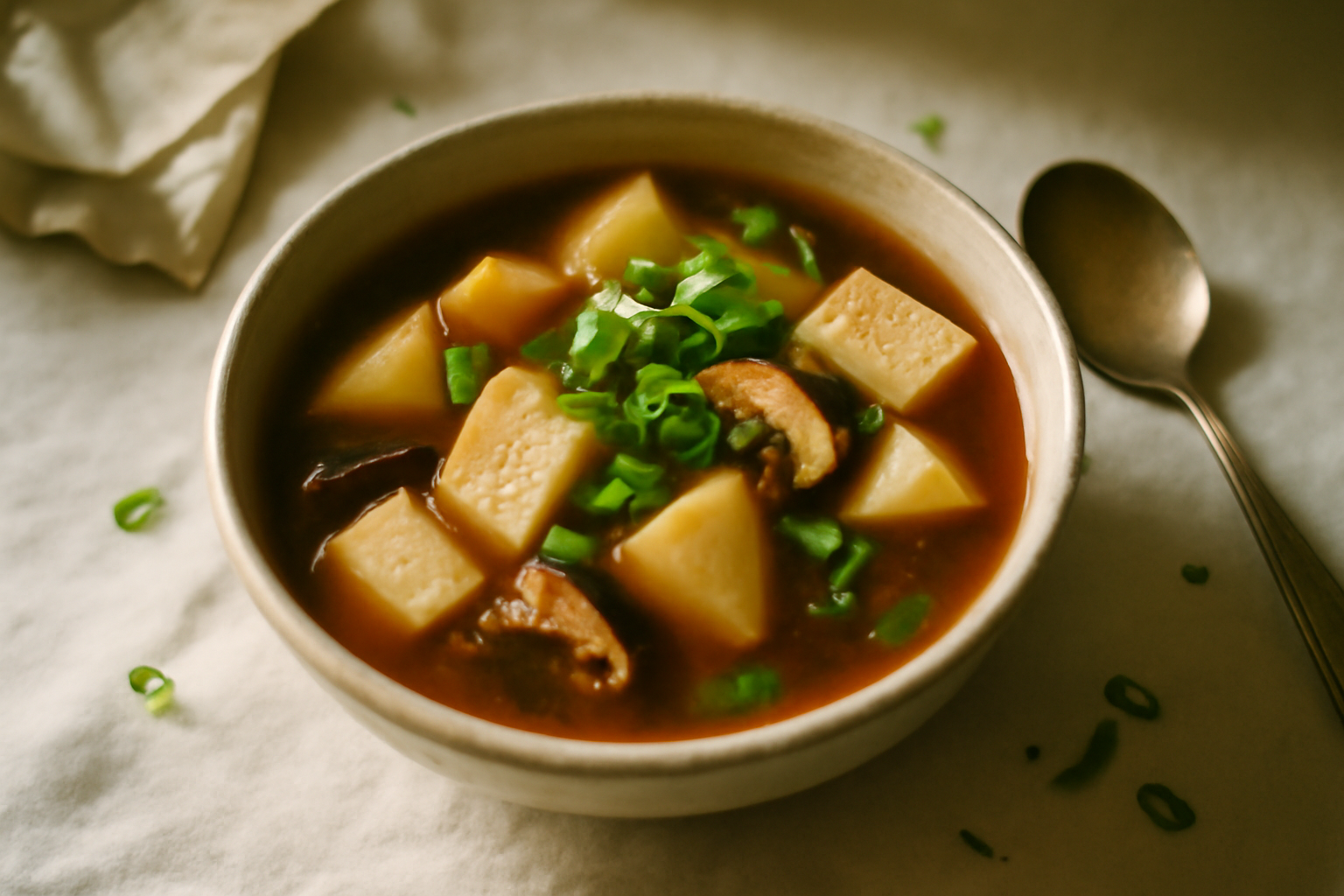 AI image
45 min
start to finish
20 min
hands on
Easy
difficulty
4
servings
Ingredients
Contains soy, sesame. Cooking for an allergy? Check the label on every packet you use — brands differ, and we can only tell you what the recipe calls for.
Roughly, per serving
210 kcal10g protein16g carbs10g fat
An estimate, not a lab analysis.
Method
Put the dried shiitake in a bowl and cover with 2 cups warm water; let soak.
Soaking in warm water shortens the wait; you can soak up to an hour in room temperature water for a deeper flavor.
While the mushrooms soak, peel and cut the potato into 1/2-inch cubes.
Uniform cubes cook evenly and help thicken the stew slightly as they break down.
Slice the onion thin, cut the zucchini into 1/2-inch half-moons, slice the scallions on the bias, mince the garlic, slice the green chili (if using), and cube the tofu.
Handle the tofu gently to keep the pieces intact in the stew.
Place 6 cups cold water and the kombu in a 4- to 5-quart pot and bring to a gentle simmer over medium heat.
Just before the water reaches a boil, remove and discard the kombu.
Removing kombu before a rolling boil prevents a bitter/seaweedy off-note.
Remove the soaked shiitake from the bowl, reserving the soaking liquid (leave any grit behind), and slice the mushrooms thinly; add the slices and 1 cup of the reserved soaking liquid to the pot.
If the soaking liquid has grit, pour it through a fine-mesh sieve or coffee filter.
Bring the pot back to a gentle simmer, ladle 2 tablespoons of the hot stock into a small bowl, and whisk the doenjang into the stock until smooth.
Dissolving the paste first prevents lumps of doenjang in the stew.
Stir the dissolved doenjang back into the pot and whisk briefly to combine.
Taste the stock after adding doenjang to get a sense of its saltiness before further seasoning.
Add the potato and sliced onion to the pot and simmer until the potato is almost tender.
Add the zucchini, tofu cubes, sliced shiitake, gochugaru, and minced garlic; simmer until the vegetables are tender and flavors have melded.
Taste the stew and season with kosher salt and/or the optional soy sauce, adding a little at a time until the balance feels right.
Doenjang varies in saltiness—season gently and re-taste after a minute or two.
Stir in the scallions and sesame oil, then turn off the heat.
Adding scallions and sesame oil at the end preserves their fresh aroma.
Ladle the stew into bowls and serve hot with steamed rice, if using.
Doenjang-jjigae is traditionally eaten with rice and banchan; a bowl of rice makes the meal more substantial.
Worth knowing
- Use a labeled vegetarian/anchovy-free doenjang; if you can only find ordinary doenjang, ask the producer or vendor if it contains seafood.
- If you prefer a thicker stew, mash a few potato cubes against the side of the pot and stir them back in.
- Make ahead: the flavors deepen after a day in the fridge; reheat gently (do not boil) so the tofu holds its shape.
- To boost umami without meat, add a small piece of dried kelp or an extra rehydrated shiitake while simmering, then remove before serving.
Make it yours
Cooking without dairy, without an oven, for someone who won't touch chilli, or for six instead of four? Have the recipe rewritten around it — quantities, steps and all.
VegetarianOne panMeal prepBudget
More Korean cooking


An original Restaurant Pro recipe — our own composition in the idiom of Korean cooking, not any restaurant's recipe. Written to be vegetarian as listed.