
Hotteok (Korean Sweet Syrup Pancakes)
Chewy, pan-fried filled pancakes with a molten brown-sugar–cinnamon center — a classic Korean home snack that's warm, sweet and perfect for sharing.
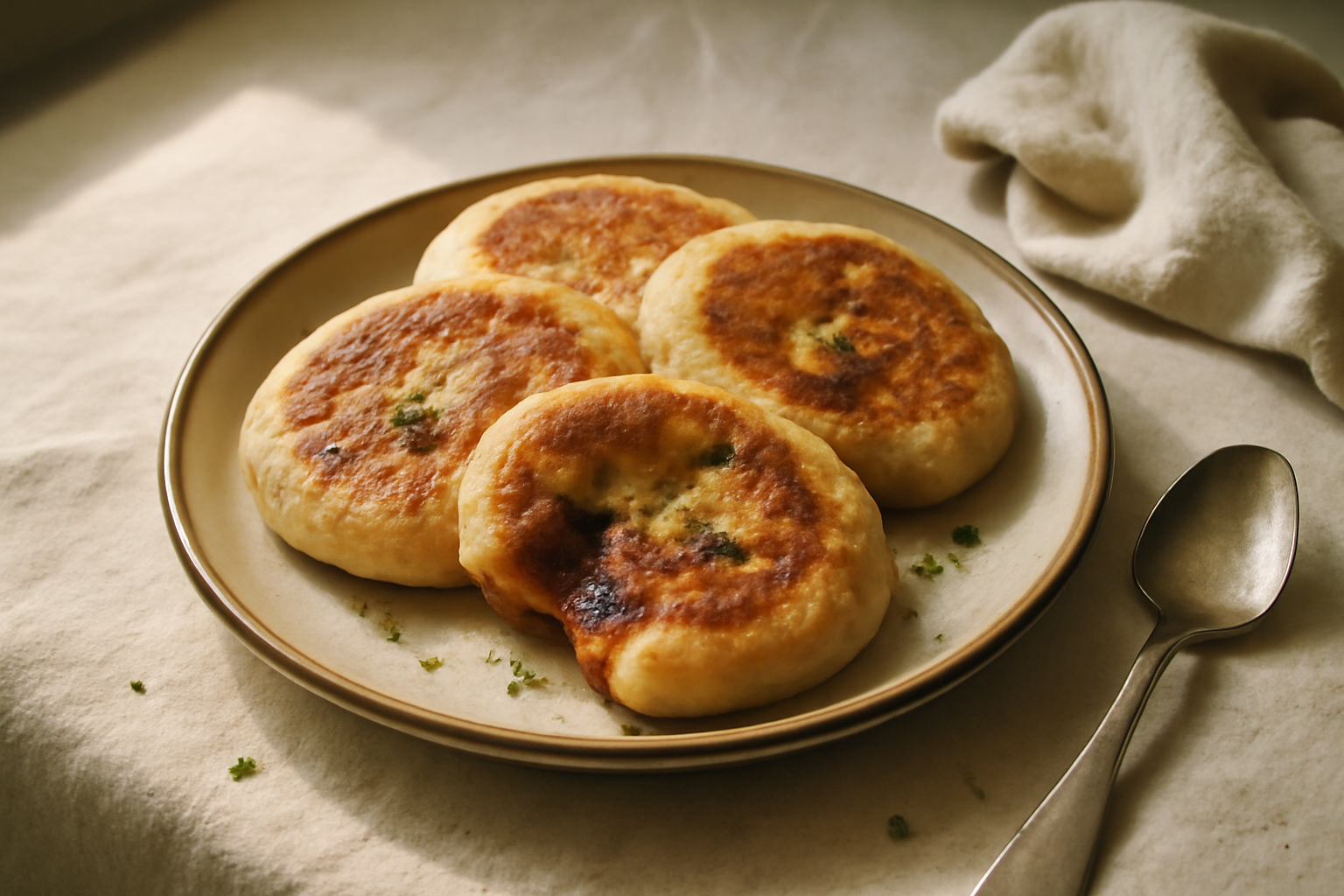 AI image
2 hr 5 min
start to finish
1 hr 50 min
hands on
Some skill
difficulty
8
servings
Ingredients
For the dough
For the filling
To cook
Contains gluten, dairy, tree-nut, sesame. Cooking for an allergy? Check the label on every packet you use — brands differ, and we can only tell you what the recipe calls for.
Roughly, per serving
300 kcal6g protein44g carbs12g fat
An estimate, not a lab analysis.
Method
Warm the milk until it's about 110°F (just warm to the touch).
If you don't have a thermometer, warm until lukewarm; too hot will kill the yeast.
Stir 1 tsp sugar into the warm milk, sprinkle the yeast over the surface and let sit until foamy.
If the yeast doesn't foam in 10–12 minutes, the yeast may be old — start again with fresh yeast.
In a large bowl combine the flour, the remaining 2 tbsp sugar and salt.
Whisk briefly so dry ingredients are evenly distributed.
Add the yeast-milk and 2 tbsp vegetable oil to the dry ingredients and mix until a shaggy dough forms.
Turn the dough onto a lightly floured surface and knead until smooth and elastic.
Place the dough in a lightly oiled bowl, cover with plastic wrap or a clean towel and let rise until doubled in size.
A warm, draft-free spot (like an oven with just the light on) helps; allow 60–90 minutes depending on room temperature.
While the dough is rising, toast the walnuts in a dry skillet over medium heat until fragrant, about 3 minutes; let cool and chop roughly.
Stir constantly so nuts don't burn.
Combine the chopped walnuts, dark brown sugar, cinnamon, toasted sesame seeds (if using) and melted butter in a bowl; stir until evenly mixed.
The filling should be loose so it melts easily inside the pancake.
Punch down the risen dough and divide it into 8 equal pieces; roll each into a smooth ball.
Flatten one ball into a 3-inch disc in your palm, put about 1 1/2 tablespoons of filling in the center, then pinch the edges together to seal and roll seam-side down into a ball. Repeat with remaining dough.
Work gently so the filling stays in the middle and doesn't leak out.
Let the filled balls rest, covered, for a short second rise to puff slightly.
This helps them cook up pillowy — don't skip if you have time.
Heat 1 tablespoon vegetable oil in a heavy skillet over medium-low. Add 3–4 filled balls (depending on pan size) seam-side down, press each gently with a spatula to flatten into a 4–5 inch pancake, and cook until golden and the sugar inside begins to melt and caramelize.
Cook on medium-low so the sugar melts before burning; total time is for all batches — each pancake needs about 3–4 minutes per side.
Flip the pancakes and cook the other side until deep golden, about 2–3 minutes. Add a little more oil between batches if the pan looks dry.
If sugar leaks and chars, reduce the heat slightly.
Transfer cooked hotteok to a plate lined with paper towel to absorb excess oil and serve warm.
Worth knowing
- To make these vegan: use warm water or plant-based milk in place of dairy milk and use vegan butter for the filling.
- If you prefer peanuts (common in some home recipes), substitute them for walnuts — note that changes allergens.
- If sugar starts to leak and burn in the pan, lower heat and add a touch more oil; very low-and-slow preserves the chewy interior and caramelizes the filling without burning.
- Hotteok are best eaten the day they're made. Reheat gently in a low oven (300°F / 150°C) or in a skillet — microwaving makes them soggy.
Make it yours
Cooking without dairy, without an oven, for someone who won't touch chilli, or for six instead of four? Have the recipe rewritten around it — quantities, steps and all.
VegetarianKid friendlyBudgetOne pan
Watch someone make it
A different recipe for the same dish, by a cook who has spent years on it.

More Korean cooking
An original Restaurant Pro recipe — our own composition in the idiom of Korean cooking, not any restaurant's recipe. Written to be vegetarian as listed.