
Hearty Vegetarian Bibimbap (Korean mixed rice with five namul and pan-fried tofu)
A filling, vegetable-forward bibimbap built from five seasoned vegetables (namul) and crispy pan-fried tofu with a simple gochujang sesame sauce — satisfying enough that nobody will miss meat.
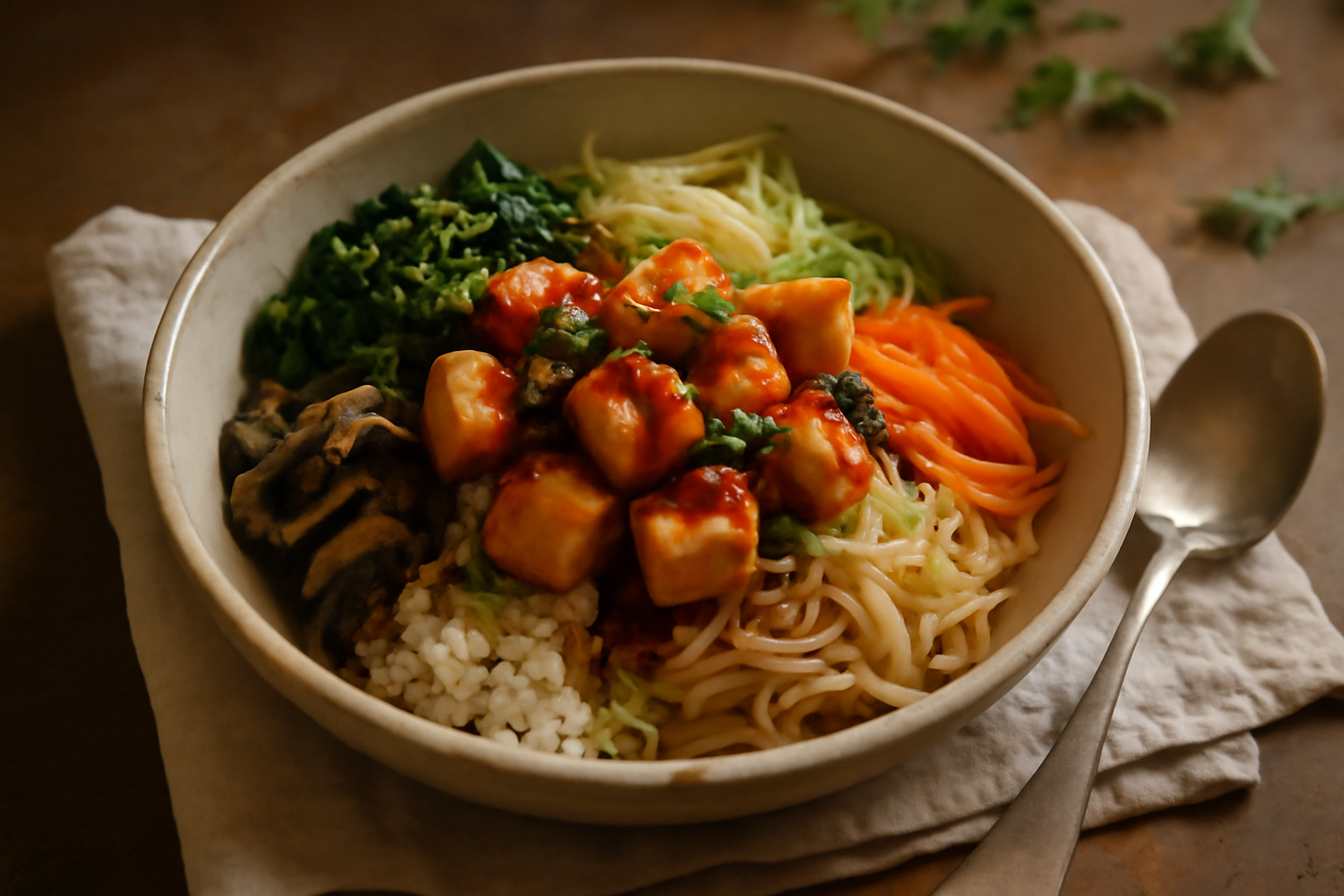 AI image
50 min
start to finish
25 min
hands on
Some skill
difficulty
4
servings
Ingredients
Rice
Gochujang sauce
Tofu
Namul (vegetable banchan)
To assemble
Contains soy, sesame. Cooking for an allergy? Check the label on every packet you use — brands differ, and we can only tell you what the recipe calls for.
Method
Rinse the short-grain rice in a bowl, changing the water until it runs nearly clear, then drain.
Cook the rice: transfer rinsed rice to a rice cooker or a pot, add 2 1/4 cups water and start the cooker or bring to a simmer, cover and cook until tender (rice cooker finish or simmer 18–20 minutes then rest 10 minutes).
If using a pot, once water simmers reduce to low and cook 18 minutes, then remove from heat and let rest 10 minutes with lid on.
Press the tofu: wrap the block in clean towels or paper towels, place on a plate and weight with a heavy pan; press for 15 minutes to remove excess water.
Pressing while the rice cooks saves time.
While tofu presses, make the gochujang sauce: whisk together gochujang, toasted sesame oil, rice vinegar, tamari, sugar, water and 1 tsp minced garlic until smooth; taste and adjust sweetness or heat.
If your gochujang is very salty, reduce the tamari.
Prepare vegetables: julienne the carrot and zucchini, slice mushrooms, trim and rinse spinach, and rinse bean sprouts.
Blanch the spinach: bring a medium pot of water to a boil, add a generous pinch of salt and the spinach, cook 30 seconds until wilted, drain and immediately rinse under cold water to stop cooking; squeeze out excess water, then season with 1 tsp sesame oil and 1/4 tsp salt and set aside.
Blanch the bean sprouts: in the same boiling water, add bean sprouts and cook 2–3 minutes until tender-crisp, drain and toss with 1/2 tsp sesame oil and 1/4 tsp salt.
Sauté the carrot: heat 1/2 tbsp vegetable oil in a skillet over medium, add julienned carrot and a pinch of salt and 1/2 tsp minced garlic, cook 2–3 minutes until just softened, then transfer to a bowl.
Sauté the zucchini: in the same skillet with another 1/2 tbsp oil, add zucchini matchsticks and a pinch of salt, cook 2–3 minutes until edges are lightly browned, then transfer to a bowl.
Sauté the mushrooms: add 1 tbsp vegetable oil to the skillet, add sliced mushrooms and a pinch of salt, cook 4–5 minutes until browned and any released liquid evaporates; stir in 1 tsp tamari and remove.
Slice the pressed tofu into 8 slabs, pat dry, heat 1 tbsp vegetable oil in a nonstick or cast-iron skillet over medium-high, add tofu and fry 3–4 minutes per side until golden and crisp; during the last minute brush with 1 tbsp tamari and a crack of black pepper.
Don’t move the tofu too often so it can form a golden crust.
If you want warm bowls, reheat vegetables briefly in the skillet for 30–60 seconds; keep each vegetable separate.
Assemble the bibimbap: divide cooked rice among 4 bowls, arrange spinach, bean sprouts, carrot, zucchini, mushrooms and 2 tofu slabs per bowl in separate sections over the rice.
Finish: spoon 1 to 1 1/2 tbsp gochujang sauce over each bowl (serve extra on the side), scatter sliced green onion and toasted sesame seeds, and serve. Mix everything before eating.
Provide extra sauce at the table so each person can adjust the heat.
Worth knowing
- Make it gluten-free by choosing tamari and a labelled gluten-free gochujang.
- Make ahead: prepare all namul and sauce up to 2 days ahead and refrigerate; quickly warm and assemble when ready.
- If you want more umami, stir 1 tsp of toasted sesame oil into each bowl before serving.
- Add a fried egg on top for non-vegetarian diners or extra richness (this will add egg allergen).
- Leftovers keep well: store components separately and reheat in a skillet for best texture.
Make it yours
Cooking without dairy, without an oven, for someone who won't touch chilli, or for six instead of four? Have the recipe rewritten around it — quantities, steps and all.
VegetarianMeal prepKid friendlyQuick
More Korean cooking


An original Restaurant Pro recipe — our own composition in the idiom of Korean cooking, not any restaurant's recipe. Written to be vegetarian as listed.