
Kare-Kare (Filipino Peanut Oxtail Stew)
A slow-braised Filipino stew of tender oxtail in a rich, savory peanut sauce, finished with annatto oil and served with bagoong. Worth the afternoon: long simmering builds deep, gelatinous body and the hands-on steps (toasting, grinding, blanching) make a satisfying project.
3 hr 15 min
start to finish
45 min
hands on
Project
difficulty
6
servings
Ingredients
Contains peanut, fish, shellfish. Cooking for an allergy? Check the label on every packet you use — brands differ, and we can only tell you what the recipe calls for.
Method
Trim excess fat from the oxtail pieces and rinse under cold water.
Place oxtail in a large pot, cover with 6 cups boiling water, bring to a boil and cook 10 minutes to draw out impurities.
Drain and discard the blanching water and any scum in the pot.
Return oxtail to the pot, add 10–12 cups fresh water (enough to cover), the halved onion, 4 crushed garlic cloves, and 1 tablespoon fish sauce; bring to a gentle simmer.
Cover partially and simmer the oxtail until very tender and the connective tissue is soft, about 120 minutes, skimming foam occasionally.
While the oxtail simmers, toast the unsalted peanuts in a skillet over medium heat, stirring, until fragrant and lightly browned.
Cool the toasted peanuts slightly, then grind them in a food processor or mortar to a coarse paste (some small bits are fine).
Toast the glutinous rice in the same dry skillet over medium heat, stirring, until golden and aromatic; let cool and grind to a fine powder in a spice grinder.
Heat 1/4 cup oil in a small saucepan over medium heat, add annatto seeds and cook, stirring, until the oil turns bright orange-red; strain to reserve annatto oil and discard the seeds.
When the oxtail is tender, remove the meat pieces to a cutting board and set aside to cool slightly.
Skim off excess fat from the surface of the braising liquid, then measure and reserve 3 cups of the clear braising liquid; keep the rest for another use or reduce further.
Remove bones from the oxtail pieces and cut or shred the meat into bite-sized pieces.
Return the reserved 3 cups of braising liquid to the pot, add the ground peanut paste, 3 tablespoons peanut butter, and the ground toasted rice; stir to combine.
Bring the pot to a gentle simmer and cook, stirring often, until the sauce thickens and the oil begins to show on the surface, about 20 minutes.
Add the annatto oil (pouring the colored oil, not the seeds) and the shredded oxtail meat back into the pot and simmer to meld flavors for 10 minutes.
Season the stew with salt and black pepper to taste and a little fish sauce if it needs more savory depth.
Bring a second pot of salted water to a rolling boil and blanch the string beans for 3 minutes; transfer to an ice bath or cold water to stop cooking and set aside.
Blanch the eggplant pieces in the same boiling water for 3–4 minutes until just tender, then cool in the ice bath and set aside.
Blanch the banana blossom (if using) for 3–4 minutes and cool in the ice bath; squeeze lightly to remove excess water.
Blanch the bok choy for 1–2 minutes until leaves wilt and stems are tender-crisp; drain and set aside.
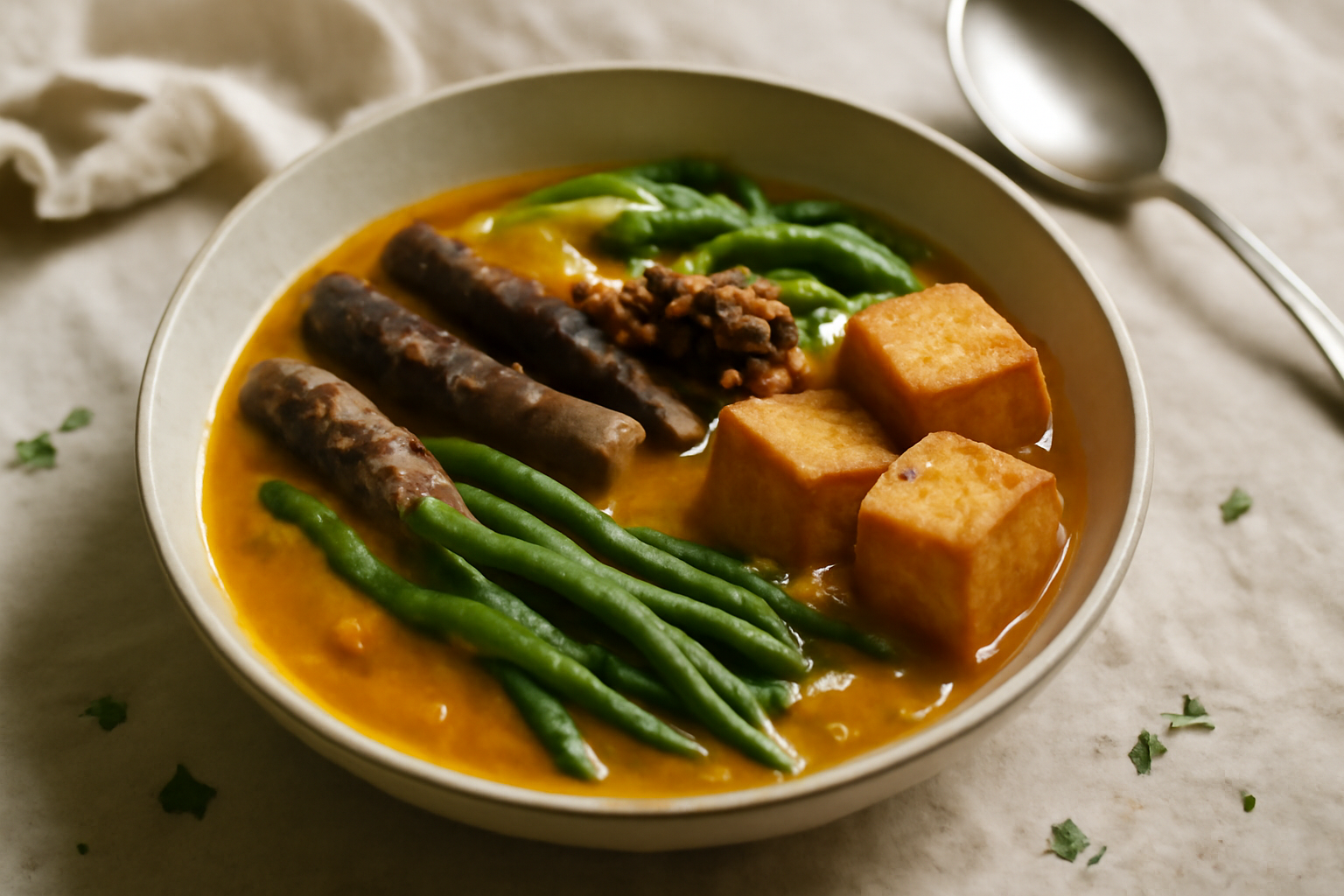
Arrange the blanched vegetables on a platter and ladle the kare-kare stew over or serve the stew in a bowl with vegetables on the side.
Serve kare-kare hot with a bowl of bagoong alamang and halved calamansi or lime on the side.
Worth knowing
- If you can't find oxtail, substitute 2½–3 lb beef short ribs or beef shank; cook until the meat is tender and falling from the bone.
- To speed the braise, use a pressure cooker: after blanching, pressure cook oxtail with aromatics and water for 45–55 minutes.
- If you prefer a silkier sauce, use the food processor to make the peanut paste very smooth; for more texture, leave it coarser.
- Bagoong is salty—add it to individual portions at the table rather than mixing it into the pot.
- Toast the rice and peanuts until aromatic but not burnt; burnt bits make the sauce bitter.
Make it yours
Cooking without dairy, without an oven, for someone who won't touch chilli, or for six instead of four? Have the recipe rewritten around it — quantities, steps and all.
High proteinMeal prep
Watch someone make it
A different recipe for the same dish, by a cook who has spent years on it.

More Filipino cooking
An original Restaurant Pro recipe — our own composition in the idiom of Filipino cooking, not any restaurant's recipe.