
Kosha Mangsho (Bengali Slow‑Braised Spiced Mutton)
A richly spiced, deeply caramelized Bengali mutton curry (kosha mangsho) cooked slowly until the meat is meltingly tender and the gravy is reduced to a glossy, concentrated sauce — a true weekend project worth the afternoon.
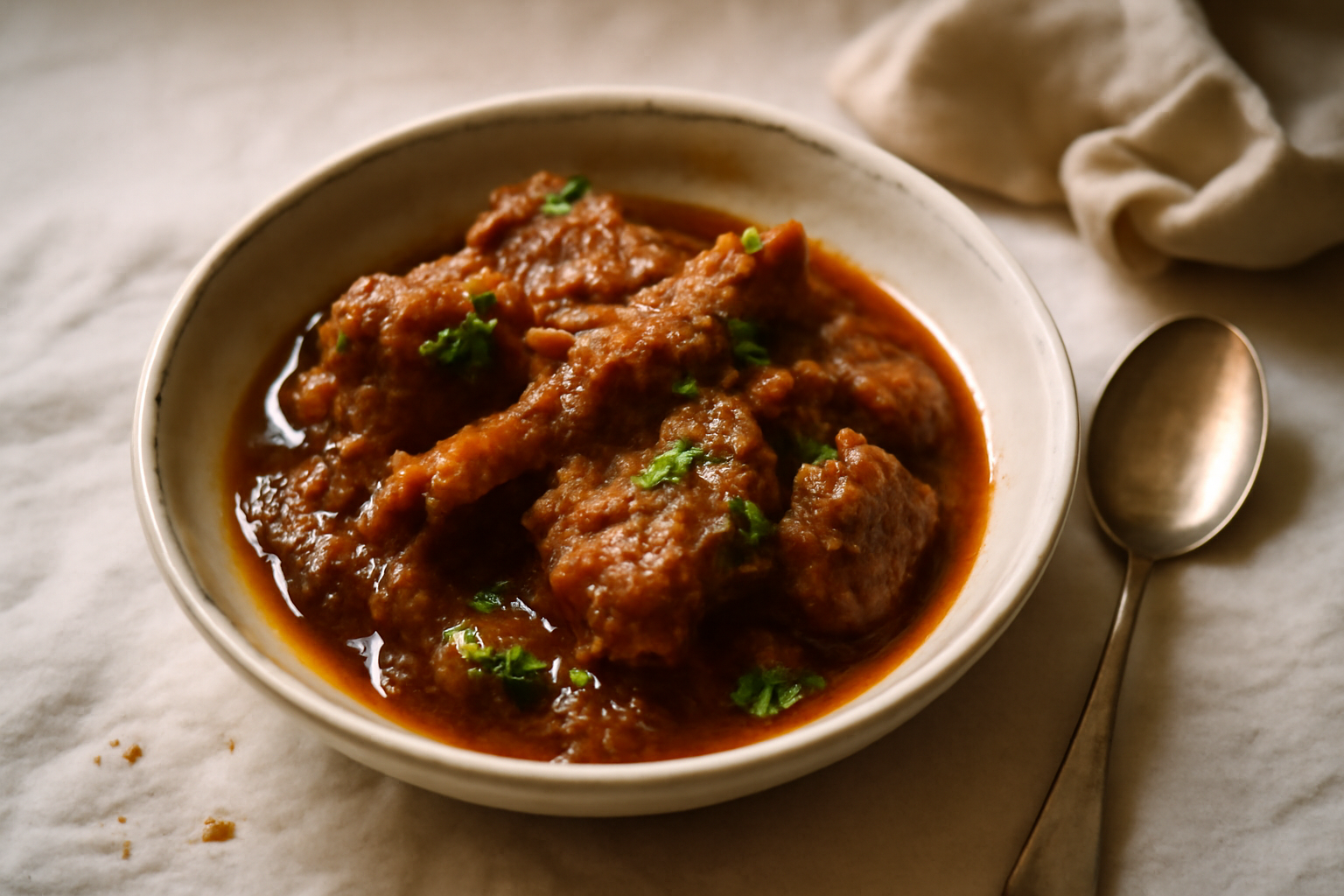 AI image
3 hr 45 min
start to finish
45 min
hands on
Project
difficulty
6
servings
Ingredients
For the marinade
Contains dairy. Cooking for an allergy? Check the label on every packet you use — brands differ, and we can only tell you what the recipe calls for.
Roughly, per serving
550 kcal30g protein6g carbs42g fat
An estimate, not a lab analysis.
Method
Trim any excess fat from the mutton and pat the pieces dry with paper towels.
Combine the yogurt, 1 tsp salt (from the listed amount), turmeric, ginger paste and garlic paste in a bowl; add the mutton and rub the marinade into the pieces until well coated.
If you have time you can marinate 2–12 hours in the fridge; at least 30 minutes is enough for this recipe.
While the meat marinates, thinly slice the onions and roughly chop the tomatoes.
Heat a heavy, wide pot or Dutch oven over medium heat until hot; add 2 tbsp mustard oil and when it just begins to smoke, reduce heat to medium‑low and add the sliced onions.
Cook the onions slowly, stirring every 2–3 minutes, until they are a deep golden‑brown and caramelized (about 40–45 minutes total). This step builds the characteristic kosha flavor — patience matters.
Reserve about 1/3 of the caramelized onions in a small bowl for garnish, then transfer the remaining onions to a blender with the chopped tomatoes and 2–3 tablespoons of water; blend to a smooth paste.
If you don't have a blender, chop the cooked onions and tomatoes very finely or pass through a food mill.
Wipe the pot clean, return to medium‑high heat, add remaining 2 tbsp mustard oil; when hot, add the whole spices (bay leaves, cinnamon stick, cardamom, cloves) and fry for 30 seconds until aromatic.
Increase heat to high and, in batches to avoid crowding, add the marinated mutton pieces and sear until well browned on all sides (about 3–4 minutes per batch). Transfer seared pieces to a plate.
Lower heat to medium, add the blended onion‑tomato paste to the pot and cook, stirring, until the paste darkens and oil starts to separate from the masala, about 8–10 minutes.
Return all the seared mutton to the pot; add ground coriander, cumin, red chili powder, black pepper, sugar, the reserved salt, tomato paste (if using) and 1½ to 2 cups water so the liquid just covers the meat.
Bring to a brisk simmer, then reduce heat to low, cover partially (lid offset to let steam escape) and braise gently until the mutton is tender and the sauce has reduced to a thick, glossy consistency — 90–120 minutes on the stove.
Check every 20–30 minutes; stir gently and add small splashes of hot water if the pot is drying out before the meat is tender.
When the meat is fork‑tender and the sauce has cooked down, increase heat to medium‑high and reduce the sauce for 6–8 minutes to concentrate flavors, stirring frequently to avoid sticking.
Stir in the ghee and garam masala, toss to coat, then simmer 1–2 minutes more so the ghee blooms through the sauce.
Turn off the heat, scatter the reserved fried onions, slit green chilies and chopped cilantro over the kosha mangsho; let rest 5 minutes before serving so flavors settle.
Serve hot with steamed rice, luchi (fried flatbread) or parathas and lemon wedges on the side.
Worth knowing
- If you want to shorten the cooking time, finish the braise in a pressure cooker: after adding water bring to pressure and cook 25–30 minutes, then reduce the sauce on high for 6–8 minutes.
- Mustard oil gives the dish an authentic pungent note; if using it, heat until just smoking then let it cool a minute before adding onions to mellow its sharpness.
- Do not rush the onion caramelization — the deep browning is the backbone of the sauce. Use a wide pan so the onions brown rather than steam.
- Kosha mangsho improves slightly if made earlier and reheated — flavors meld overnight, making it a great make‑ahead weekend dish.
- For a dairy‑free version, omit the ghee and use extra oil; replace yogurt with 2 tbsp lemon juice and 2 tbsp water (meat will be slightly less tender).
Make it yours
Cooking without dairy, without an oven, for someone who won't touch chilli, or for six instead of four? Have the recipe rewritten around it — quantities, steps and all.
High proteinMeal prep
More Bengali cooking
An original Restaurant Pro recipe — our own composition in the idiom of Bengali cooking, not any restaurant's recipe.