
Nasu Dengaku — Miso-Glazed Grilled Japanese Eggplant
Tender broiled (or grilled) eggplant topped with a sweet-savory rice-miso glaze. Fast to make and richly flavored — a classic plant-based Japanese side or main.
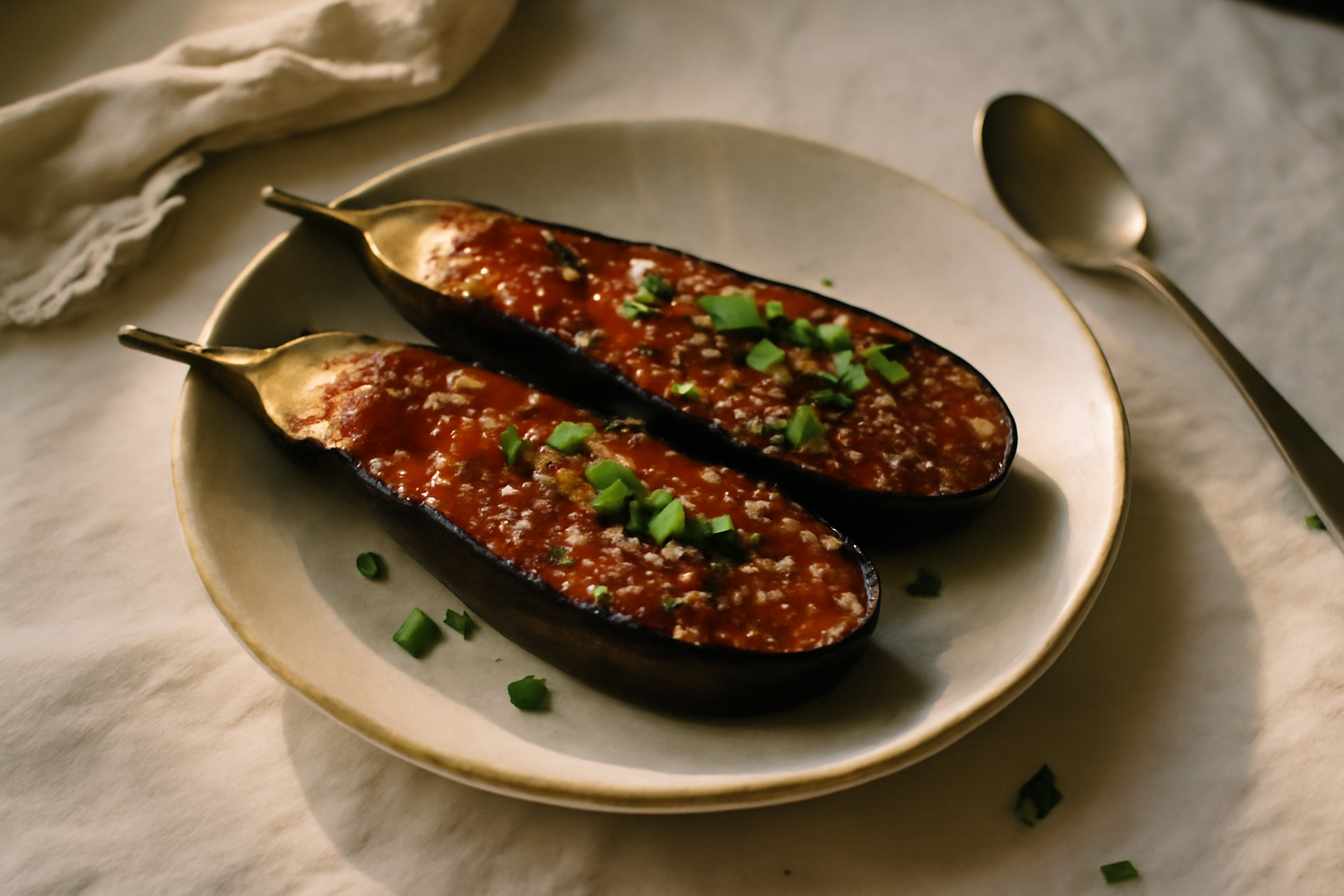 AI image
30 min
start to finish
15 min
hands on
Easy
difficulty
4
servings
Ingredients
For the miso glaze
Contains soy, sesame. Cooking for an allergy? Check the label on every packet you use — brands differ, and we can only tell you what the recipe calls for.
Roughly, per serving
160 kcal3g protein18g carbs8g fat
An estimate, not a lab analysis.
Method
Position an oven rack 6–8 inches (15–20 cm) below the broiler element and preheat the broiler to high; line a rimmed baking sheet with foil for easy cleanup.
Trim the eggplants and cut them in half lengthwise; using a sharp knife, score the flesh in a shallow crosshatch (don’t cut through the skin) to help them cook evenly.
Sprinkle the cut surfaces with the salt and arrange the eggplants cut-side up on a wire rack or plate to draw out moisture.
While the eggplants sweat, whisk the miso, mirin, sake (or water), sugar, and toasted sesame oil in a small bowl until smooth and glossy.
Rinse the salt from the eggplants under cold running water and pat the cut surfaces thoroughly dry with paper towels.
Brush the cut surfaces of each eggplant with the neutral oil and arrange them cut-side up on the prepared baking sheet.
Broil the eggplants until the flesh is softened and beginning to brown around the edges, watching to avoid burning.
Remove the tray from the oven, spread the miso glaze evenly over each cut surface (about 1–2 tablespoons each), then return the tray to the broiler.
Broil again until the glaze bubbles and darkens slightly (it should caramelize but not burn); watch closely and rotate the tray if needed.
Let the eggplants rest for 2 minutes, then sprinkle with toasted sesame seeds, sliced scallions and a light dusting of shichimi togarashi if using; serve warm.
Worth knowing
- If you don't have a broiler: cook cut-side down in a large nonstick or cast-iron skillet over medium-high heat, covered, 6–8 minutes until softened; flip, spread glaze and cook uncovered 1–2 minutes until glaze bubbles.
- Use white (shiro) rice miso for a milder, sweeter glaze. If you only have darker miso, reduce the sugar by 1/2 teaspoon.
- To keep the recipe gluten-free, confirm the rice miso is labeled gluten-free and avoid regular soy sauce (use tamari labeled gluten-free if a recipe calls for soy sauce).
- Leftovers refrigerate up to 3 days; reheat briefly under the broiler or in a hot skillet to revive the glaze.
- Substitute mirin with 1 tablespoon rice vinegar + 1 teaspoon sugar if you don't have mirin (adjust sweetness to taste).
Make it yours
Cooking without dairy, without an oven, for someone who won't touch chilli, or for six instead of four? Have the recipe rewritten around it — quantities, steps and all.
VeganGluten-freeDairy-freeQuickKid friendly
More Japanese cooking
An original Restaurant Pro recipe — our own composition in the idiom of Japanese cooking, not any restaurant's recipe. Written to be vegan and gluten-free and dairy-free as listed.