
Cholar Dal (Bengal Chana Dal) with Luchi
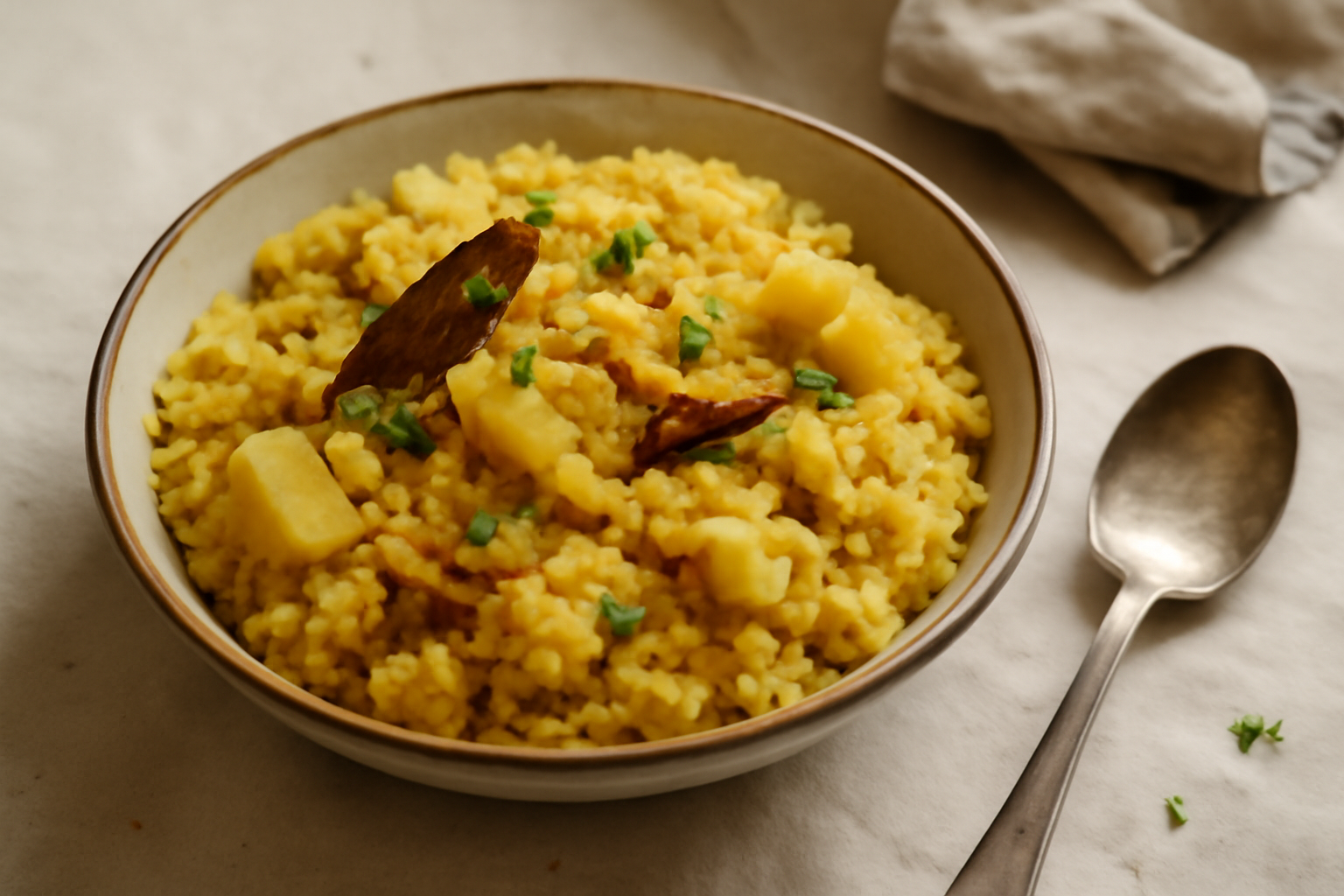
A classic Bengali breakfast: mildly spiced, slightly sweet cholar dal (split chickpea dal) scented with roasted coconut and spices, served with light, flaky deep-fried luchi (puffed flatbreads). Great for a weekend brunch.
1 hr 10 min
start to finish
30 min
hands on
Some skill
difficulty
4
servings
Ingredients
For the cholar dal
For the cholar dal (tadka)
For the luchi
Contains gluten, dairy, tree-nut. Cooking for an allergy? Check the label on every packet you use — brands differ, and we can only tell you what the recipe calls for.
Roughly, per serving
760 kcal22g protein100g carbs38g fat
An estimate, not a lab analysis.
Method
Rinse the chana dal under cold running water until the rinse water is clear.
Soak the rinsed dal in fresh cold water to cover.
Soaking shortens cooking time and gives a creamier texture; you can soak 30–60 minutes.
Put the all-purpose flour and salt into a large bowl, add 1 tablespoon ghee and rub it into the flour until it resembles coarse crumbs.
Add lukewarm water a little at a time and knead to a soft, smooth dough; cover and let it rest.
A well-rested dough makes puffier luchi.
Drain the soaked dal and place it in a pressure cooker with 3.5 cups water, turmeric, bay leaf, cinnamon stick and crushed cardamom.
Cook the dal under pressure until tender (about 3–4 whistles on medium heat), then let pressure release naturally.
If you prefer a thicker dal, use slightly less water; for a looser consistency, add more water when finished.
Meanwhile heat 1 tablespoon vegetable oil in a small skillet over medium heat, add the grated coconut and roast, stirring, until it turns light golden.
Watch the coconut closely—it browns quickly but adds toasty flavor.
Turn the heat down, add cumin seeds and dried red chili to the same pan, fry 20–30 seconds to wake their aroma, then remove from heat.
Open the pressure cooker, remove the bay leaf and cinnamon stick, then pour the roasted coconut and spice mix into the cooked dal and stir to combine.
Add the jaggery (or sugar), 1 tablespoon ghee and a final pinch of salt, then simmer the dal gently for 5 minutes to let flavors marry.
Divide the rested dough into 12 equal pieces and roll each into a smooth ball.
On a lightly floured surface, roll each ball into a thin 3–4 inch (7–10 cm) disc, keeping them as round and even as possible.
Roll thin but not paper-thin; a slightly thicker edge helps the luchi puff.
Heat the frying oil in a heavy-bottomed pot to shimmering but not smoking (test by dropping a small dough scrap—if it rises immediately and puffs, oil is ready).
Maintain medium-high heat; too hot will brown luchi before it puffs, too cool will make them oily.
Fry luchis in batches (3–4 at a time), sliding each rolled disc into the oil and pressing gently with a slotted spoon so they puff, turning once, until golden on both sides.
Drain on paper towels and keep warm in a low oven (200°F / 95°C) if making ahead.
Serve the cholar dal hot, spooned into bowls, with freshly fried luchi alongside.
Garnish the dal with a small spoon of ghee if you like; serve with a wedge of lime or a simple fried egg on the side for a heartier brunch.
Worth knowing
- If you can't find fresh coconut, use 1/3 cup desiccated coconut rehydrated in 2 tablespoons warm water and squeeze out excess before roasting.
- For a dairy-free version, skip the finishing ghee and use an extra tablespoon of neutral oil for the tadka.
- To test oil temperature without a thermometer, the small dough scrap should sizzle and float up immediately and begin to puff.
- Cholar dal keeps in the refrigerator for 3 days and reheats well; reheat gently and add a splash of water if it thickens.
- If luchis don't puff, it usually means the dough was too tight, rolled too thick, or the oil temperature was too low—adjust accordingly on the next batch.
Make it yours
Cooking without dairy, without an oven, for someone who won't touch chilli, or for six instead of four? Have the recipe rewritten around it — quantities, steps and all.
VegetarianMeal prep
More Bengali cooking
An original Restaurant Pro recipe — our own composition in the idiom of Bengali cooking, not any restaurant's recipe. Written to be vegetarian as listed.